Leave Your Message
0%

Choosing the right Soft Starter manufacturer isn’t just about comparing prices or flipping through product catalogs. You’ve gotta look deeper — things like starting current, motor size, bypass design, cooling needs, and what kind of support they offer. For example, a 75 kW pump might need totally different protection than a conveyor running in a dusty factory. It’s those small details that really matter.

In this article, I’ll walk you through a practical review of ten well-known manufacturers, including big names like ABB, Siemens, Schneider Electric, Rockwell Automation, Eaton, WEG, Toshiba, Carlo Gavazzi, CHINT, and AuCom. We'll dig into stuff like how reliable their products are, what kind of technical documentation they provide, how solid their support is during setup, warranty details, and whether they’re available in your region. We’ll also see if their offerings match different loads like pumps, fans, compressors, or conveyors. And honestly, datasheets, installation guides, application notes, and even their distributor networks tell you way more than fancy marketing talk.

Now, let’s keep it real — no single manufacturer is perfect. A company with super advanced controls might not have the best local support, and a cheaper soft starter might seem tempting but can turn into a nightmare trying to get spare parts or help later on. So, always double-check things like voltage, current, enclosure conditions, communication options, and certifications before you hit ‘buy’. Also, remember — Soft Starters aren’t a replacement for variable frequency drives if you need continuous speed control. That’s a mistake people often make without realizing it.

Keep in mind, these companies serve different industries and regions, so their strengths might change depending on your project size, motor type, climate, or after-sales support needs. Think of this as a starting point, not your final buying decision. The real-world experiences of installers and maintenance teams can sometimes reveal issues that product brochures don’t mention at all.
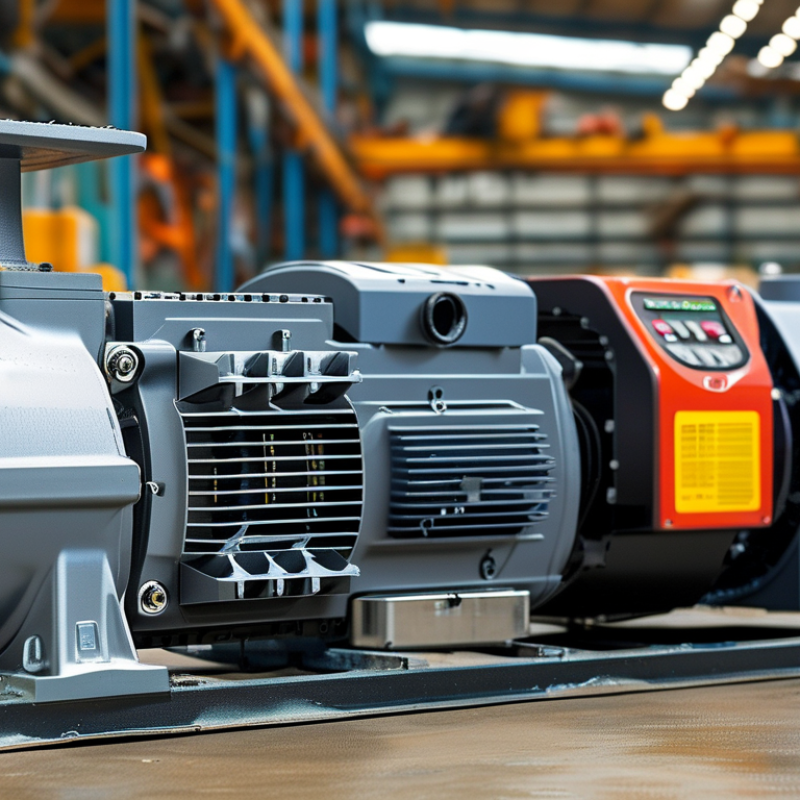
Top 10 Soft Starter Manufacturers for Global Buyers?

What Is a Soft Starter and Why Does It Matter?

What Is a Soft Starter and Why Does It Matter?

A soft starter controls the voltage supplied to an induction motor during startup. Instead of receiving full power instantly, the motor accelerates through a controlled voltage ramp. This reduces starting current, belt shock, pipe surges, and stress on couplings. In a factory, that difference can protect a conveyor gearbox or prevent a pump from jolting against its pipeline.

A Soft Start Starter usually uses power electronics, bypass contactors, and adjustable protection settings. During commissioning, I check the motor’s rated current, starting load, ramp time, and enclosure conditions. A ten-second ramp may suit a lightly loaded fan, but a heavy crusher may need a different approach. Small details matter. Poor settings can still cause overheating or nuisance trips.

Soft starters are not variable-speed drives. They help motors start smoothly, but they do not provide continuous speed control. Global buyers should ask manufacturers for tested thermal data, fault records, wiring diagrams, and compliance evidence under applicable electrical standards. Service response also matters when a unit fails beside a running production line. I have seen buyers focus on purchase price and overlook ventilation, bypass wiring, or spare thyristors. That choice can become expensive. Some applications need a drive instead, and honest technical review should say so.

How to Evaluate Global Soft Starter Manufacturers

Evaluating global soft starter manufacturers requires more than comparing catalog prices. Check their experience with your motor type, load profile, and installation environment. A supplier familiar with pumps may not understand crushers or high-inertia fans. Ask for documented case studies, thermal test records, and failure data from comparable projects.

Request precise technical details. Confirm motor voltage, rated current, starting frequency, bypass design, overload protection, and enclosure rating. A unit installed in a dusty cement room needs stronger protection than one inside a clean control cabinet. Review operating limits from -10°C to 50°C, communication options, spare-part availability, and repair procedures. Certification documents should match your destination market, not merely display familiar symbols.

Test support quality before ordering. Send a practical question about a 250 kW motor and measure the response time and technical depth. Can their engineers explain torque control, voltage ramp settings, and fault history codes clearly? Ask for commissioning guidance, wiring diagrams, and remote troubleshooting terms in writing. A factory visit or live product demonstration can reveal assembly discipline, labeling quality, and test-bench practices.

Price still matters. It should not lead. I once focused too heavily on purchase cost and underestimated local service delays. That mistake affected production planning. Some suppliers also provide impressive documents but weak field support. Verify references independently, inspect warranty exclusions, and clarify who owns the problem when a starter trips repeatedly. Reliability is proven after installation.

Top 10 Soft Starter Manufacturers for Global Buyers? - How to Evaluate Global Soft Starter Manufacturers

Rank Evaluation Dimension Recommended Benchmark Evidence to Request Why It Matters for Global Buyers
1 Applicable Product Standard Compliance with IEC 60947-4-2 for AC semiconductor motor controllers and starters, where applicable. Declaration of conformity, test reports, product ratings, and the exact standard edition used. A recognized product standard provides a consistent basis for comparing safety, performance, and testing requirements across markets.
2 Motor and Load Compatibility The selection should cover the required motor voltage, rated current, starting duty, load inertia, and starting frequency. Published current tables, application charts, motor data requirements, and sizing calculations for pumps, fans, compressors, and conveyors. Correct sizing reduces nuisance trips, excessive heating, failed starts, and premature motor or starter damage.
3 Electrical Performance Adjustable ramp-up and ramp-down functions, current limiting, kick-start capability where needed, and phase-loss or overload protection. Parameter list, application manuals, oscilloscope or test data, protection thresholds, and rated-duty curves. These functions help control mechanical shock, voltage drop, water hammer, and process interruptions.
4 Bypass and Thermal Design An integrated or externally coordinated bypass arrangement should be clearly specified, including continuous-current and bypass ratings. Thermal-loss data, derating curves, bypass wiring diagrams, ventilation requirements, and enclosure heat calculations. Bypass operation can reduce heat dissipation during running conditions and influence panel size and reliability.
5 EMC and Power Quality The product should state applicable electromagnetic compatibility requirements and installation conditions, including cable routing and grounding. EMC test summary, installation instructions, immunity and emission information, and required external components. Clear EMC information helps prevent control-system interference and unexpected behavior in industrial networks.
6 Environmental Protection The required enclosure protection should be stated using the IP Code defined by IEC 60529; temperature, altitude, humidity, and pollution conditions must also be declared. IP rating, operating-temperature range, altitude derating, humidity limits, storage conditions, and installation clearances. Environmental limitations directly affect service life, cooling performance, corrosion resistance, and installation suitability.
7 Control and Communication Required control inputs, relay outputs, analog signals, local keypad functions, and fieldbus options should match the project control architecture. I/O list, wiring diagrams, communication manuals, protocol details, and PLC integration examples. Good integration reduces commissioning time and improves access to alarms, status information, and operating data.
8 Quality Management and Traceability A documented quality system, controlled production records, serial-number traceability, and defined inspection procedures should be available. Current ISO 9001 certificate, sample inspection records, serial-number policy, corrective-action process, and factory-audit access. Traceability supports consistent production, faster failure analysis, and more reliable after-sales service.
9 Documentation and Global Compliance Technical documents should be available in clear English and adapted to the destination market's electrical, safety, labeling, and import requirements. Datasheets, manuals, CAD files, certificates, labels, packaging specifications, and country-specific compliance documents. Complete documentation lowers customs, installation, training, and regulatory risks for international projects.
10 Service, Warranty, and Supply Capability Evaluate published warranty terms, spare-parts availability, technical response procedures, lead-time control, and lifecycle support. Written warranty policy, service-level targets, spare-parts list, failure-return procedure, production lead time, and reference projects. Reliable support and supply continuity can have a greater effect on total cost of ownership than the initial purchase price.
Suggested evaluation method: Score each manufacturer from 1 to 5 for every dimension, assign higher weighting to compliance, application fit, thermal design, and service capability, and verify all claims with controlled documents or witnessed testing.

Top 10 Soft Starter Manufacturers for International Buyers

For international buyers, choosing among the top 10 soft starter manufacturers requires more than comparing online prices. A reliable supplier should show tested starting curves, thermal limits, and clear motor-sizing guidance. Look for an Automatic Soft Starter that matches voltage, current, duty cycle, and enclosure conditions. A 400 V pump panel in a humid plant needs different protection from a dry indoor conveyor. Small details matter.

Experienced buyers ask for IEC test reports, wiring diagrams, firmware information, and spare-part availability before placing orders. They also confirm whether local technicians can commission the unit and troubleshoot fault codes. Strong manufacturers explain bypass contactor life, ramp settings, overload behavior, and restart limits in plain language. Do not trust a polished catalog alone. I have seen low-cost selections fail when ambient temperature reduced their usable current rating. That mistake was avoidable, but product tables were not read carefully.

For global projects, assess factory quality controls, traceable serial numbers, warranty terms, and response times across time zones. Request a sample inspection or witnessed load test when the application is critical. Compare noise, cabinet heat, harmonic impact, and motor acceleration under real load. A soft starter may appear suitable yet struggle with a crusher, compressor, or heavily loaded pump. Ask for evidence, not promises. Then record every assumption in the purchase specification.

Key Features and Technologies to Compare

Top 10 Soft Starter Manufacturers for Global Buyers?

Key Features and Technologies to Compare

Selecting a soft starter requires more than comparing current ratings. The U.S. Department of Energy reports that motor-driven equipment uses about 70% of industrial electricity. Starting control therefore affects equipment stress, downtime, and maintenance planning. I examine the rated motor current, supply voltage, starting class, and enclosure conditions before reviewing price.

Modern units should provide adjustable voltage ramps, current limiting, kick-start control, phase-loss protection, and electronic overload models. These functions reduce mechanical shock in pumps, conveyors, and compressors. A Bypass Soft Starter can reduce heat loss after acceleration by transferring current through bypass contacts. Check the contactor’s duty rating and switching endurance. Small details matter.

Communication also deserves attention. Industrial Ethernet or fieldbus support can connect starting data with plant monitoring systems. The Global Energy Management System industry guidance from the International Energy Agency emphasizes measurement and operational control for improving motor-system performance. However, a soft starter is not an automatic energy-saving device during steady operation. That assumption is common, but incomplete.

Harmonic behavior, cooling clearance, and service access should be compared against IEC 60947-4-2 requirements. Ask for tested fault ratings, thermal capacity curves, and documented performance at reduced voltage. A supplier’s application experience matters, especially with high-inertia loads. I would also test emergency restart logic carefully. A perfect scorecard is unrealistic. Reliability sometimes depends on wiring quality, ventilation, and an installer’s overlooked five minutes.

Industry Applications and Regional Market Strengths

Top 10 Soft Starter Manufacturers for Global Buyers?

Industry Applications and Regional Market Strengths

Soft starters reduce motor inrush current and mechanical shock during startup. They are widely used with pumps, conveyors, compressors, fans, crushers, and HVAC systems. In water treatment plants, they help limit pressure surges in long pipelines. On conveyor lines, they reduce belt strain and product movement. Mining sites often require reinforced enclosures and strong cooling systems. Dust changes everything.

Regional strengths influence equipment selection. European manufacturers often emphasize energy efficiency, compact designs, and strict environmental requirements. North American suppliers commonly focus on industrial compatibility, service access, and broad voltage ranges.

East Asian production centers offer scalable manufacturing and competitive pricing. Their products often suit factory automation and commercial infrastructure. Middle Eastern projects may prioritize heat resistance, remote monitoring, and dependable operation in dusty conditions. Latin American buyers frequently need practical solutions for mining, agriculture, and food processing.

Field experience shows that electrical ratings alone are not enough.

Engineers should check motor duty, starting frequency, ambient temperature, bypass arrangements, and enclosure protection. A soft starter may perform well in a test room but struggle inside a hot control cabinet. This is easy to overlook.

Local service capability also matters, especially when downtime affects water supply or production schedules. Buyers should compare documentation quality, testing procedures, warranty conditions, and spare-part availability.

The cheapest option can become expensive after one avoidable shutdown.

How to Select the Right Soft Starter Supplier

Selecting the right Soft Starter Supplier requires more than comparing catalog prices. Match the unit with motor power, starting current, load type, duty cycle, and installation environment. A pump may need different ramp settings than a crusher or conveyor. Check voltage tolerance, overload protection, enclosure rating, and thermal capacity. For compact panels, aBuilt-In Bypass Soft Starter can reduce heat and wiring complexity. Request clear technical drawings and verified test data before ordering.

Tips: Ask for application-specific guidance, not generic product tables. Confirm whether the supplier provides commissioning support, parameter software, spare parts, and response times. Review compliance with the electrical standards used in your destination market. A reliable supplier should explain limitations clearly. Promises without test records deserve caution.

During supplier evaluation, inspect sample manuals and fault histories. Good documentation should show wiring diagrams, alarm codes, cooling requirements, and recommended cable sizes. Speak with engineers who have handled similar motors. I once focused too heavily on rated power and overlooked frequent starts. That mistake could have caused unnecessary thermal trips. Ask about factory testing, warranty terms, training, and long-term service access. The cheapest offer may become expensive when troubleshooting is slow. Availability matters. So does honest technical support.

FAQS

What does a soft starter do during motor startup?

It reduces inrush current and mechanical shock. This helps protect belts, couplings, pumps, and connected equipment.

Which industries commonly use soft starters?

Common applications include water treatment, mining, agriculture, food processing, HVAC, and factory automation. Pumps and conveyors are frequent examples.

How can a soft starter help a water treatment system?

It can reduce pressure surges in long pipelines. Smoother acceleration may protect pipes, pumps, and water supply schedules.

What should mining operators consider when selecting a soft starter?

Mining sites may need reinforced enclosures and strong cooling. Dust changes everything. Check enclosure protection and thermal performance carefully.

Do regional market strengths affect supplier selection?

Yes. European suppliers often emphasize compact, efficient designs. North American suppliers may offer broad voltage ranges and accessible service.

Which technical details matter beyond motor power?

Check starting current, motor duty, starting frequency, ambient temperature, bypass design, and enclosure protection. Rated power alone is insufficient.

Can installation conditions affect soft starter performance?

Yes. A unit may work in a test room but struggle inside a hot control cabinet. Cooling space and thermal capacity matter.

What documents should buyers request before ordering?

Request wiring diagrams, technical drawings, verified test data, alarm codes, cable sizes, and cooling requirements. Clear documents reduce installation mistakes.

How should buyers evaluate supplier support?

Ask about commissioning, parameter software, spare parts, training, warranty terms, and response times. Availability matters. So does honest technical support.

What is a common mistake when choosing a soft starter?

Focusing only on rated power can overlook frequent motor starts. I once made that mistake. Thermal trips could follow.

Conclusion

This guide explains what a Soft Starter is and why it is important for modern motor-driven systems. By gradually increasing motor voltage, a Soft Starter can reduce starting current, mechanical stress, voltage dips, and maintenance requirements. The article also outlines how international buyers can evaluate manufacturers by examining product quality, technical expertise, certification, customization capabilities, after-sales service, delivery reliability, and total ownership cost.

It presents a practical comparison framework for the top 10 Soft Starter manufacturers serving global markets, without focusing on brand promotion. Readers will learn how to compare key features such as overload protection, bypass functions, communication interfaces, energy efficiency, monitoring systems, and compatibility with different motor applications. The discussion also considers regional strengths and industry uses in sectors including water treatment, manufacturing, mining, HVAC, and infrastructure. Finally, the guide offers clear selection advice to help buyers choose a dependable supplier based on operating conditions, project requirements, budget, support capacity, and long-term business goals.

Liam

Liam

Liam is a dedicated marketing professional at Zhejiang Luoka Electric Co., Ltd., where he leverages his extensive knowledge of the company's innovative electrical products to enhance brand visibility and customer engagement. With a deep understanding of the industry, Liam consistently produces......
Previous 7 Automatic Soft Start Buying Tips for Global Buyers