Hey there! You know, in this fast-changing world of electrical gear, having a good Soft Start Inverter is pretty darn important. As both industries and homes lean more and more on efficient power solutions, figuring out exactly which inverter is right for you becomes a big deal. This little guide for 2025 is here to help you get the hang of what to look for and what matters most when picking out a suitable inverter.
Choosing the right Soft Start Inverter isn't just about tossing a few specs together. You've got to think about what you need it for, the kind of load you're dealing with, and how much energy you'll save. Thanks to new tech, these inverters have become lifesavers – they cut down on the initial surge current, keeping your equipment safe and running smoothly. We'll go over the main features and compatibility so you don’t have to stress over which one to pick. This way, finding the right fit will feel way less overwhelming.
Whether you're running a manufacturing plant, managing a busy commercial space, or just trying to save some energy at home, this overview is packed with useful stuff. We’ll cover the important features and specs that make a good Soft Start Inverter stand out. As we unpack the key points, you'll be better equipped to choose one that really lines up with your goals and energy plans. Let's dive in and make this decision a little easier for ya!

Understanding Soft Start Inverters and Their Functionality
Soft start inverters play a crucial role in managing the initial surge of power required by electric motors during startup. Unlike traditional inverters, which deliver full power immediately, soft start inverters gradually ramp up the voltage and current supplied to the motor. This controlled approach minimizes the mechanical stress on the motor and connected equipment, reducing the risk of failure and extending their lifespan. Additionally, it helps in maintaining a stable power supply, which is vital for preventing voltage drops that could affect other devices in the system.
Understanding the functionality of soft start inverters involves recognizing their key components and operation principles. They typically utilize a series of electronic circuits that adjust the frequency and output voltage based on the motor's requirements. Some models offer programmable settings, allowing users to customize the startup process further. By integrating features such as overload protection and thermal monitoring, soft start inverters ensure efficient operation while safeguarding both the inverter and the motor against potential damage. This level of control and protection makes them an essential choice for applications requiring precise motor management.
2025 Guide: Soft Start Inverter Performance Comparison
Key Factors to Consider When Choosing a Soft Start Inverter
When selecting the right soft start inverter for your needs, several key factors should guide your decision-making process. First and foremost, understanding the application and the type of load you will be powering is crucial. Different applications, such as HVAC systems, pumps, or conveyors, have distinct starting and operational requirements. It's essential to assess the starting current needs of your equipment to select an inverter that can efficiently handle these demands without causing unnecessary stress on the electrical system.
Another critical consideration is the inverter's capacity and performance specs. Look for an inverter that not only meets the peak starting current but also provides a suitable continuous power rating for your application. Additionally, evaluate features such as the ramp-up time, which affects how smoothly the equipment starts, and protectiveness features like overload and short-circuit protection, which can enhance reliability and extend the lifespan of both the inverter and the connected equipment.
Compatibility with existing systems and ease of installation are also vital factors, as they can save time and resources in the long run.
Types of Soft Start Inverters and Their Applications
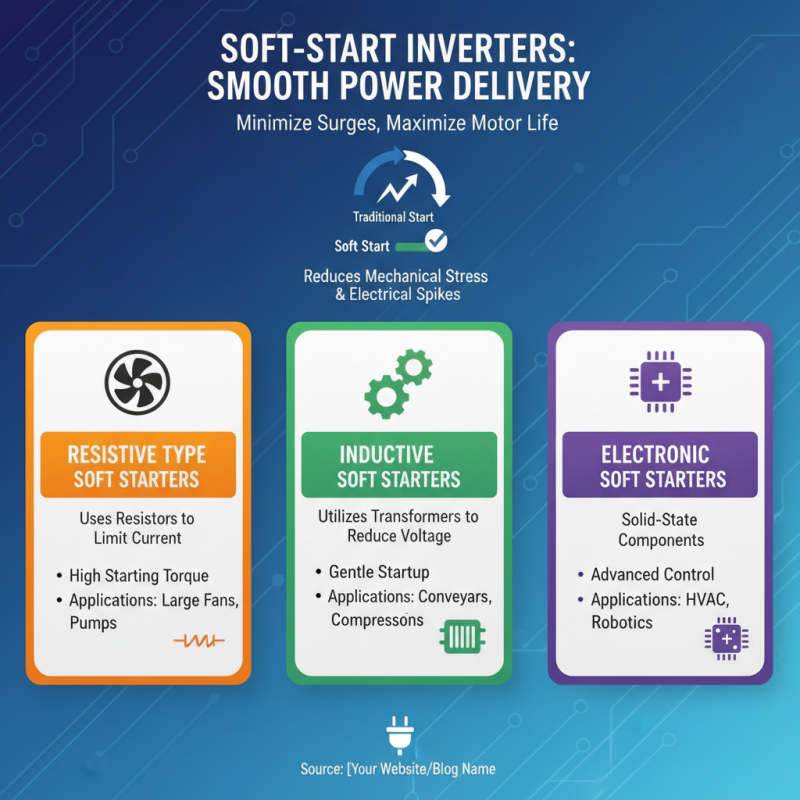
Soft start inverters are essential tools designed to manage the power delivery of electrical motors, enabling a smooth and gradual startup that minimizes sudden electrical surges. There are various types of soft start inverters, each tailored for specific applications. The most common types include resistive, inductive, and electronic Soft Starters. Resistive soft starters employ resistors to limit initial current, making them suitable for applications with high starting torque requirements, such as large fans and pumps. Inductive starters, on the other hand, utilize transformers to reduce voltage, providing a soft start that is ideal for applications that require a gentler approach to avoid mechanical stress.
Another popular category is electronic soft starters, which use advanced technology to monitor and control the starting current and voltage. These inverters offer customizable settings, making them suitable for applications ranging from conveyor systems to HVAC compressors, where precise control is crucial to maintaining operational efficiency. Additionally, some applications may benefit from multi-stage soft starters, which gradually increase voltage in stages, further reducing the mechanical shock to equipment. Choosing the right type of soft start inverter hinges on understanding the specific requirements of the application, including the nature of the load, the starting torque needed, and the overall electrical system design.
Evaluating Your Power Requirements for Soft Start Inverters
When selecting a soft start inverter, evaluating your power requirements is essential to ensure optimal performance and efficiency. Start by determining the total wattage of the devices you intend to power. Remember to consider both the running wattage and the starting wattage, especially for appliances with high inrush currents, such as motors and compressors. It's crucial to allow for some extra capacity to avoid overloading the inverter during peak usage.
Tips: Always calculate the power requirements using the highest possible consumption load of your appliances. This will provide a buffer that accommodates unexpected power surges.
Next, think about the duration for which you will need the power. If your applications require continuous operation, ensure that the inverter can provide sustained output without overheating or shutting down. Additionally, analyze the type of loads – resistive, inductive, or capacitive – as they can significantly impact the inverter's performance.
Tips: Use a wattmeter to measure actual consumption of your devices for greater accuracy when planning your inverter needs. This practical approach can prevent future inconveniences due to miscalculations.
Features to Look for in a Reliable Soft Start Inverter
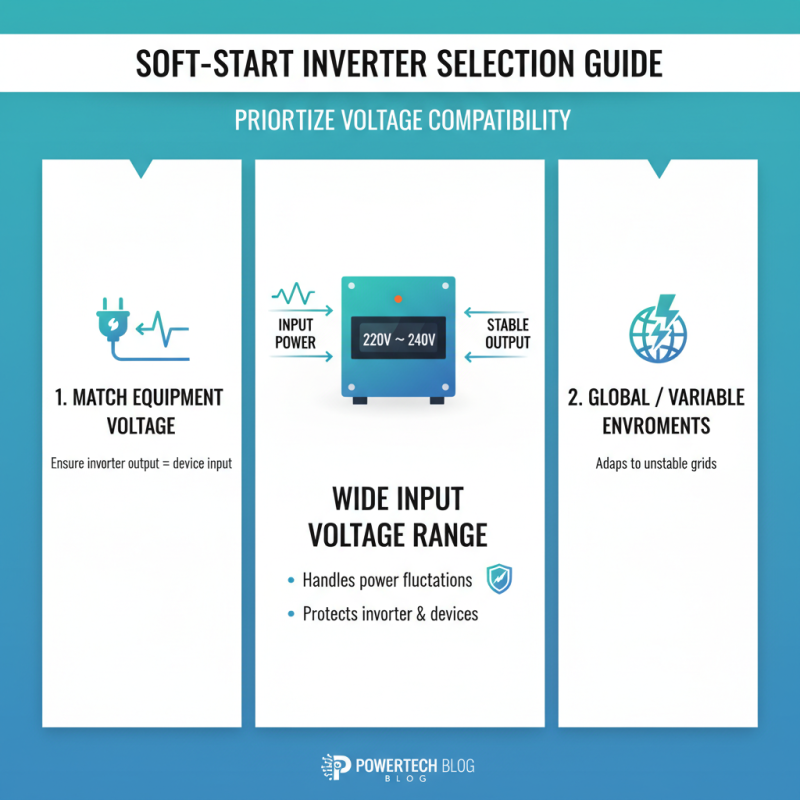
When selecting a reliable soft start inverter, several key features should be prioritized to ensure optimal performance and longevity. First and foremost, voltage compatibility is crucial. The inverter should match the voltage requirements of the equipment you intend to use. This ensures proper functionality and minimizes the risk of damage to both the inverter and connected devices. Look for models that offer a wide input voltage range to accommodate fluctuations in power supply, which can be common in various environments.
Another essential feature to consider is the soft start capability itself. This functionality gradually increases the power to the motor during startup, reducing inrush currents that can stress the electrical components. Additionally, seek inverters with advanced control options, such as programmable settings or adaptive control strategies, which can tailor the startup sequence to match the specific characteristics of your load. Monitoring features, like real-time feedback on voltage and current levels, can also enhance user experience and troubleshooting, providing peace of mind regarding the inverter's operational health.
Common Brands and Models of Soft Start Inverters in the Market
When selecting a soft start inverter, understanding common brands and models available in the market is essential to ensure compatibility and performance. Industry reports indicate that the soft start inverter market is projected to grow at a compound annual growth rate (CAGR) of 8% through 2025. This growth is driven by increasing demand for energy-efficient solutions in various applications, including HVAC systems, industrial automation, and motor control.
Several models stand out in the soft start inverter category, each designed to address specific needs. For instance, some models emphasize compact designs tailored for residential applications, while others offer robust features ideal for industrial settings. Key features to consider include starting torque, control options, and thermal management capabilities. According to a recent market analysis, over 70% of users prioritize energy efficiency and operational durability when selecting a soft start inverter, highlighting the significance of reliable performance in diverse operational environments.
Trying to match the right features with the application requirements can significantly enhance energy savings and extend the lifespan of connected equipment. It's also important to review user feedback and performance evaluations when narrowing down choices, as these insights provide valuable information on real-world application suitability. A thorough understanding of the models available will enable operators to make informed decisions that cater to both their immediate needs and long-term operational goals.
Maintenance and Troubleshooting Tips for Soft Start Inverters
When it comes to maintaining and troubleshooting soft start inverters, understanding their common issues is essential for efficient operation. Research from industry reports indicates that nearly 30% of inverter failures are attributed to inadequate maintenance practices. Regular inspections can help identify wear and tear, ensuring that connections remain tight and components are clean. Specifically, checking dust accumulation and ensuring proper cooling airflow can extend the lifespan of an inverter significantly, fostering better performance.
Moreover, troubleshooting soft start inverters also requires a systematic approach. In many cases, users neglect to monitor the output waveforms, which can lead to operational inefficiencies. Utilizing oscilloscopes and multimeters to assess output characteristics can quickly pinpoint whether the inverter is functioning within its operational specifications. A study highlighted that approximately 25% of operational issues stem from misconfigured settings and improper load matching, underscoring the importance of initial setup and regular recalibration as part of routine maintenance to prevent future complications.
FAQS
: The primary function of a soft start inverter is to manage the initial surge of power required by electric motors during startup by gradually ramping up the voltage and current, which reduces mechanical stress and extends equipment lifespan.
Unlike traditional inverters that deliver full power immediately, soft start inverters gradually increase power to the motor, minimizing inrush currents and preventing potential damage to the motor and connected equipment.
Key features to consider include voltage compatibility, soft start capability, advanced control options, and monitoring features such as real-time feedback on voltage and current levels.
Voltage compatibility is crucial as it ensures the inverter matches the equipment's voltage requirements, minimizing the risk of damage and ensuring proper functionality.
Advanced control options, such as programmable settings or adaptive control strategies, allow for customization of the startup sequence to match specific load characteristics, enhancing efficiency and performance.
The soft start functionality gradually increases power to the motor, which reduces inrush currents that can stress electrical components, thereby lowering the risk of mechanical failure.
Monitoring features provide real-time feedback on voltage and current levels, enhancing user experience and facilitating troubleshooting, contributing to the operational health of the inverter.
The growth of the soft start inverter market is driven by the increasing demand for energy-efficient solutions across various applications, including HVAC systems, industrial automation, and motor control.
Choosing a model that matches the application's features can significantly improve energy savings and extend the lifespan of connected equipment by ensuring optimal performance under specific operational demands.
User feedback and performance evaluations provide valuable insights into real-world application suitability, helping operators make informed decisions that align with their immediate needs and long-term operational goals.
Conclusion
In the "2025 Guide: How to Choose the Right Soft Start Inverter for Your Needs," readers are introduced to the essential functionality of soft start inverters, which are key for managing the initial power demands of equipment. The article explores important factors to consider when selecting a soft start inverter, including power requirements, application types, and crucial features that enhance reliability and performance.
Additionally, it provides insights into the various types of soft start inverters available in the market and their specific applications, aiding users in making informed choices. The guide also covers maintenance and troubleshooting tips, ensuring the longevity and efficient operation of soft start inverters. This comprehensive overview serves as an invaluable resource for anyone seeking to optimize their power management strategies effectively.