Leave Your Message
0%

When it comes to motor control, the **Single Phase Soft Starter** really plays a key role. Experts like John Smith from Power Solutions Inc. often highlight just how important it is—he'd probably say that picking the right soft starter can actually make a real difference in efficiency. It’s not just about picking what looks good or what’s cheapest; choosing the right model really impacts how well things run.

A lot of folks miss some important points when they’re selecting a soft starter. For example, making sure it can handle the load conditions is a big deal. Stuff like overload protection and starting torque are also things to pay attention to—ignoring these could cause issues down the line. Picking wisely can help avoid motor damage and help your equipment last longer.

That said, many people tend to make the same mistake—they might focus too much on saving a few bucks and end up sacrificing quality. This can lead to more inefficiencies and even higher maintenance costs over time. It’s definitely worth checking if the device you’re considering actually fits your specific needs. Sometimes, going for a **Single Phase To Single Phase Vfd** might be a smarter move—these can be fine-tuned on the fly and better suited for certain applications. In the end, paying attention to these details really helps align your choice with your operational goals and keeps things running smoothly.
How to Choose the Right Single Phase Soft Starter?

Understanding Single Phase Soft Starters and Their Applications

When considering the right single-phase soft starter, it's essential to understand its functionality and applications. A soft starter gently ramps up motor speed. This helps reduce initial current spikes during start-up. Consequently, it protects the motor and enhances its lifespan. Single-phase Soft Starters are ideal for smaller applications that require moderate torque and speed. Common uses includeHVAC systems and small pumps.

Tips: Always evaluate the load type before choosing a soft starter. Inductive loads, like motors, need more attention. Look for starters that can handle inrush current effectively. You don’t want to under-specify, leading to performance issues.

Think about installation and space. Some soft starters are compact, making them suitable for limited spaces. Others might require additional components. Ensure your setup can accommodate your choice. If space is tight, simpler models might be necessary. Remember, usability often outweighs brand names. Choose what fits your specific needs best, even if it means compromising on some advanced features.

Evaluating Motor Specifications for Soft Starter Selection

When selecting a single phase soft starter, understanding motor specifications is crucial. The motor’s voltage and current ratings must match the soft starter’s capabilities. You should check the motor's starting torque, which dictates the necessary soft starter performance. A mismatch can lead to underperformance or damage.

Consider the motor's application. Is it for a pump or a conveyor? Each has unique demands. Some motors may require a higher inrush current. A typical soft starter may struggle with that. Assessing these details ensures your choice aligns with operational needs.

Also, think about adjustable settings. A good soft starter offers various parameters for customization. You might need to adapt settings for different loads. Don't overlook the importance of monitoring features. They help track performance and can highlight potential issues. Reflect on future requirements as well. Will you upgrade to a Single Phase Vfd For Single Phase Motor? Planning ahead can save you time and resources.

Key Features to Look for in Single Phase Soft Starters

When selecting a single-phase soft starter, focus on key features that enhance performance and reliability. One crucial aspect is the current rating. Ensure the soft starter can handle the motor's full load current. An undersized starter may lead to overheating and early failure. It’s essential to align the current rating with your specific application needs.

Another important feature is overload protection. Seek models that offer reliable overload detection and automatic shutdown. This protection helps prevent motor damage. Additionally, adjustable ramp-up and ramp-down times should be available. These settings allow for smoother motor starts and stops, reducing mechanical stress.

Consider the control options too. Some soft starters include advanced control interfaces. These features can simplify the setup process. However, complex controls might overwhelm users unfamiliar with technology. Reflect on your team's expertise when choosing. Balancing complexity and usability is vital. Be cautious of overly complicated features that may not be necessary for your application.

Key Features to Consider in Single Phase Soft Starters

Importance of Current Rating and Design in Soft Starter Choices

Selecting the right single phase soft starter is crucial for optimal performance. One key aspect to consider is the current rating. This rating specifies the maximum current that the soft starter can handle. If the current rating is too low, it can lead to premature failure. Conversely, selecting a unit with an excessively high rating might not offer additional benefits and could increase costs unnecessarily.

Design is another vital factor in your decision-making process. A well-designed soft starter minimizes wear on electrical components. It also ensures smooth operation, reducing the chances of overheating. A unit with an efficient design can help in managing the starting current effectively. This is particularly important when using systems like Vfd Single Phase To Single Phase.

Improperly assessing current ratings can result in inadequate protection. Additionally, neglecting design features might lead to frequent breakdowns. It's essential to conduct a thorough analysis of your needs. Choosing a soft starter based on assumptions can lead to regret later on. Sometimes, it’s beneficial to consult with knowledgeable technicians for clarity.

Assessing Control Options: Manual vs. Automatic Soft Starters

How to Choose the Right Single Phase Soft Starter?

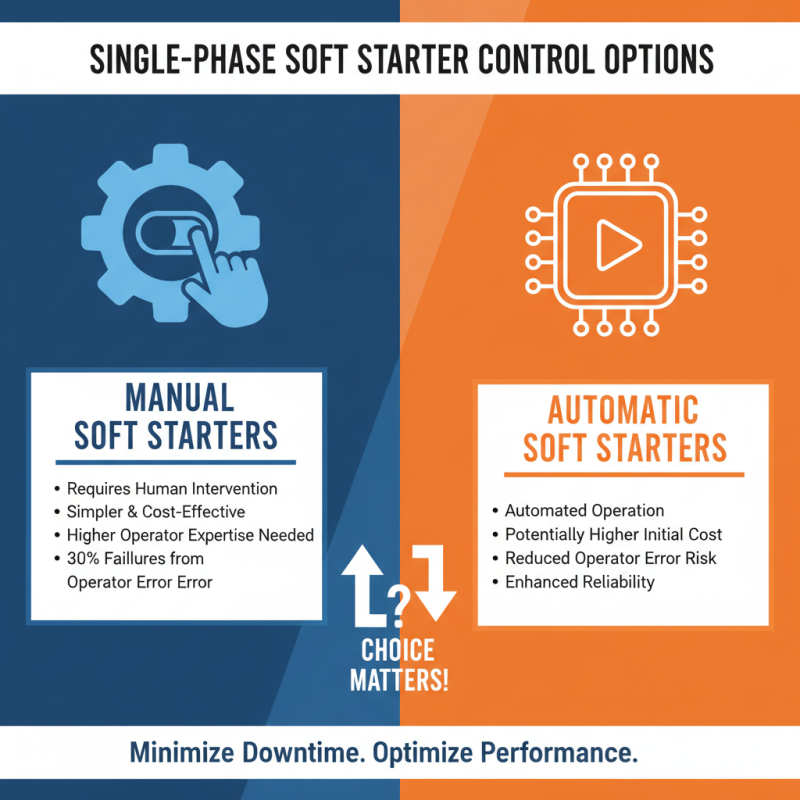
When choosing a single phase soft starter, control options play a crucial role. Two primary types are manual and automatic soft starters. Manual starters require human intervention for operation. They can be simpler and more cost-effective. However, they demand a higher level of operator expertise. A study found that about 30% of manual starter failures occur due to operator error. This highlights the potential downsides of relying solely on manual control.

On the other hand, automatic soft starters enhance convenience. They can adjust starting profiles based on load requirements. A report from the Electric Power Research Institute indicated that automatic soft starters reduce starting current by up to 50%. This not only protects the motor but also improves system efficiency. Automation may also reduce maintenance costs over time. Yet, they can be pricier upfront. This raises a question: do the long-term benefits outweigh the initial investment?

Choosing between manual and automatic involves trade-offs. Each option has its strengths and weaknesses. Consider your specific needs and the experience level of the operators. Always evaluate the total cost of ownership, including potential savings from improved efficiency. Making a choice without thorough assessment might lead to complications later.

Benefits of Using Soft Starters for Energy Efficiency and Motor Life

When considering energy efficiency, soft starters provide significant benefits. They gradually ramp up motor speed, minimizing inrush current. This reduces stress on the motor and extends its lifespan. Soft starters help prevent wear and tear during starts. They also improve overall system performance by eliminating frequent power surges.


Another advantage is energy savings. The controlled acceleration minimizes energy waste. In fact, choosing the right soft starter can lead to noticeable reductions in energy consumption. While soft starters are effective, users must be careful in their selection. Not all models fit every application. Each motor system has unique demands, and a mismatch can lead to inefficiencies or failures.


Exploring options like Vfd Single Phase To Single Phase Factory can aid in finding the right match. However, it’s crucial to understand the operating conditions. Overlooking this can lead to poor results. The balance between performance and efficiency requires thoughtful consideration. It’s a journey of trial and reflection.

Manufacturer Reputation and Industry Standards in Soft Starter Selection

When choosing a single-phase soft starter, understanding manufacturer reputation is crucial. A reputable manufacturer often guarantees quality. Look for certifications that align with industry standards. This can include compliance with safety regulations or energy efficiency norms. A strong industry presence may indicate reliability.

Assessing customer feedback can also provide insight into a manufacturer’s credibility. Online reviews are valuable but can be mixed. Check multiple sources for a complete picture. It’s important to consider both positive and negative feedback. This reflection can lead to a more informed decision.

Lastly, investigate the technical support offered by the manufacturer. Good support can ease installation challenges and operational issues. Don't overlook this when selecting a Vfd Single Phase To Single Phase Supplier. A company with strong support can enhance your experience. Balancing reputation and support may be challenging, but it's essential for long-term satisfaction.

Evaluating the Performance and Efficiency of LCRV5-A External Bypass Soft Starters: Insights from Industry Reports on Soft Starter Advancements

The LCRV5-A External Bypass Soft Starter represents a significant advancement in soft starter technology, offering both enhanced performance and efficiency. This innovative product features a reimagined design that focuses on improved isolation and insulation. Such characteristics are essential for safeguarding equipment and ensuring reliable operation in various industrial environments. By minimizing electrical noise and enhancing the overall safety of electrical systems, the LCRV5-A helps to extend the lifespan of connected machinery and ensures consistent performance.

One of the standout features of the LCRV5-A is its reliable heat dissipation capability. Effective heat management is crucial for maintaining optimal performance in soft starters, as excessive heat can lead to malfunctions and increased wear on components. The LCRV5-A has been engineered to offer superior thermal management, which not only protects the unit itself but also supports the longevity and efficiency of the entire system. This improvement directly addresses concerns within the industry about the durability of soft starters, allowing users to operate confidently under varying load conditions and improving overall operational efficiency.

FAQS

: What are common uses for this product?

: It is often used for home repairs and DIY projects. People use it to fix broken items.

Is it safe to use indoors?

Generally, yes. Ensure good ventilation and follow safety instructions to minimize risks.

How do I store the product properly?

Keep it in a cool, dry place. Make sure it is tightly sealed after use.

Can it be used on different materials?

Yes, it can work on wood, metal, and plastic. Test a small area first.

What are some common mistakes with this product?

Over-application can lead to mess. Not cleaning the surface well can affect results.

Is there a shelf life?

Some products may expire. Check the packaging for an expiration date to be sure.

What happens if I spill it?

Clean it up immediately with a cloth. Ignoring spills can create tough stains.

Can I use it in cold weather?

It may not work effectively in cold conditions. Opt for a warmer environment for better results.

What if it doesn't bond properly?

This might happen due to dampness. Ensure surfaces are dry for effective bonding.

How often should I use it?

Use it as needed. Over-reliance can lead to not addressing underlying issues fully.

Conclusion

Choosing the right Single Phase Soft Starter involves a comprehensive understanding of their function and applications. It is essential to evaluate the motor specifications to ensure compatibility with the soft starter, focusing on key features that enhance performance. Considerations such as current rating and design play a significant role in making informed choices, as they directly affect the efficiency and longevity of the motor.

Moreover, assessing control options between manual and automatic soft starters allows for tailored solutions to specific operational needs. Utilizing Single Phase Soft Starters not only aids in energy efficiency but also extends the lifespan of the motor. Additionally, taking into account manufacturer reputation and adherence to industry standards is crucial for reliable selection, ensuring that the chosen soft starter meets the necessary performance expectations and safety regulations.
Liam

Liam

Liam is a dedicated marketing professional at Zhejiang Luoka Electric Co., Ltd., where he leverages his extensive knowledge of the company's innovative electrical products to enhance brand visibility and customer engagement. With a deep understanding of the industry, Liam consistently produces......
Previous How to Find the Top Ten Soft Start Starter Manufacturers