Leave Your Message
0%

Picking the right Soft Starter 7.5 Kw in 2026 isn’t just about matching the motor’s nameplate rating. A 7.5 kW motor might run a pump, conveyor, compressor, or fan—and each one asks for something different at start-up. A pump often needs controlled acceleration to cut down water hammer. A conveyor? It may need more torque right from the beginning. So yeah, the application really matters.

A solid choice starts with the basics: motor voltage, full-load current, how often it starts, enclosure conditions, and whether you need bypass. Look at the Soft Starter’s current rating, not just the kilowatt number on the ad. Make sure it works with three-phase systems, has the motor protection and ramp settings you need, and accepts the control signals you’ve got. It should also fit the cabinet temperature and ventilation. Honestly, small details can be the difference between smooth starts and constant tripping.

Technical datasheets, IEC-based documentation, and installation instructions will get you further than random online advice. Have an experienced electrician check wiring, grounding, coordination, and commissioning measurements. If you can, record the motor’s actual starting current—it can reveal assumptions that looked fine on paper. Even then, selection isn’t perfect. Really heavy loads, frequent starts, or poor power quality might mean you need a bigger model or an engineering review. A careful buyer compares tested performance, warranty support, spare-part availability, and supplier credibility before deciding. In 2026, the best Soft Starter 7.5 Kw isn’t just the cheapest one. It’s the one that fits the real load, the installation environment, and the long-term operating plan.
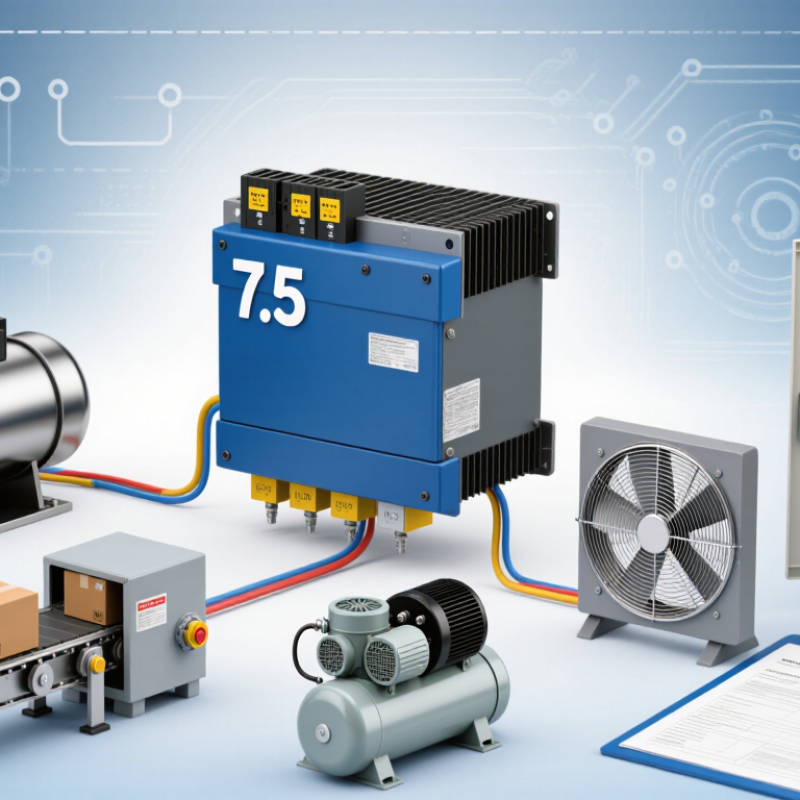
How to Choose a 7.5 kW Soft Starter in 2026?

What Is a 7.5 kW Soft Starter and How Does It Work?

A 7.5 Kw Soft Starter controls motor voltage during startup. It uses thyristors to increase voltage gradually, limiting inrush current and reducing mechanical shock. After acceleration, an internal bypass contactor may carry the running current. This lowers heat inside the starter.

At 400 V, a typical 7.5 kW three-phase motor draws roughly 14–16 A at full load. Actual current depends on efficiency, power factor, and motor design. The International Energy Agency reports that electric motor systems consume about 50% of global electricity. Therefore, smoother starting can support equipment life and reduce avoidable electrical stress. However, a soft starter does not provide continuous speed control. A variable-frequency drive is more suitable when speed adjustment is required. Choose the starter by nameplate current, not power rating alone. That detail is easy to miss.

Tips: Check the motor’s full-load current, supply voltage, starting frequency, load inertia, and ambient temperature. Confirm the required ramp time with a qualified electrician. For pumps, an adjustable stopping ramp can reduce water hammer. For conveyors, test the acceleration under real load. Laboratory figures rarely match dusty, cold, or heavily loaded sites.

Relevant standards such as IEC 60947-4-2 address semiconductor motor controllers and soft starters. Still, certification does not guarantee correct sizing. A 7.5 kW unit may struggle with frequent starts or high-inertia machinery. I would leave thermal margin, even when the calculated current appears acceptable.

Which Motor Specifications Must Be Checked First?

How to Choose a 7.5 kW Soft Starter in 2026?

Which Motor Specifications Must Be Checked First?

A 7.5 kW motor rating is only a starting point. Check the motor nameplate before selecting a soft starter. Record rated voltage, full-load current, phase count, frequency, and connection method. A 400 V, three-phase motor may require different settings from a 230 V motor. The rated current matters more than the kilowatt figure. It determines whether the starter can handle continuous operation without overheating.

Study the application, too. A centrifugal pump usually needs a lighter start than a loaded conveyor or crusher. Check starting torque, load inertia, acceleration time, and the number of starts per hour. The motor’s service factor and insulation class also deserve attention. I have seen selections fail because engineers checked power but ignored frequent cycling. That mistake is expensive. Sometimes the published motor data is incomplete, so verify it with measured current and the equipment manual.

Tips: Compare the starter’s rated current with the motor’s full-load current, not just its power. Confirm bypass requirements, enclosure protection, ambient temperature, and control voltage. Leave thermal headroom. Do not rely on a factory default ramp. A pump may need gentle voltage control, while a conveyor may stall with an overly slow ramp. Test the acceleration under real load, then adjust current limit and ramp time carefully. Small differences matter.

How to Match Voltage, Current, and Starting Duty

How to Choose a 7.5 kW Soft Starter in 2026?

Selecting a Soft Start Starter begins with the motor nameplate, not the motor’s kilowatt figure alone. Check the rated voltage, phase, frequency, and full-load current. A 7.5 kW motor may draw different currents at 230, 400, or 480 volts. The starter’s input and output voltage must match the supply and motor connection. Never estimate this value from memory. The terminal label matters.

Choose a current rating above the motor’s normal full-load current. Then examine starting duty carefully. A conveyor loaded with materials may need more starting torque than an unloaded pump. Check starts per hour, ramp time, locked-rotor current, and ambient temperature. Heavy or frequent starts can overheat a small unit. A bypass contactor may reduce running heat, but it does not correct poor sizing. I have seen tidy installations fail because duty conditions were ignored.

Tips: Record the nameplate current and supply voltage. Measure the cabinet temperature during operation. Confirm the motor’s connection matches the selected voltage. Ask an experienced electrician to verify protection settings and cable sizing. Leave practical space around the starter for airflow. This step is easy to overlook. Also, review the application after installation. If the motor still jerks, stalls, or trips, the ramp settings may need adjustment. The original selection might need reconsideration.

How to Choose a 7.5 kW Soft Starter in 2026? - How to Match Voltage, Current, and Starting Duty
Selection Dimension Typical Motor or System Data Recommended Soft-Starter Specification Why It Matters
Motor and Supply Matching
Motor output power 7.5 kW, approximately 10 hp Select a unit whose rated current is at least equal to the motor full-load current; do not size by kW alone. Motor current changes with voltage, efficiency, power factor, enclosure, and manufacturer design.
Supply phase Most 7.5 kW industrial motors use a three-phase supply. Use a three-phase soft starter with the same line frequency and compatible connection arrangement. A three-phase controller is required for a standard three-phase induction motor.
Line voltage Common systems include 200–240 V, 380–415 V, 440–480 V, and 500–600 V AC. The soft starter voltage range must include the measured system voltage, including permitted supply tolerance. A 400 V-rated unit should not be applied to a 480 V system unless its specifications explicitly allow it.
Motor connection Typical motor nameplates may show 230/400 V or 400/690 V, depending on winding design. Connect the motor in accordance with the nameplate voltage and the soft-starter wiring diagram. Incorrect star/delta selection can cause low torque, excessive current, or winding damage.
Line frequency Usually 50 Hz or 60 Hz; some systems support both. Choose a model rated for the actual frequency, or for 50/60 Hz operation when required. Frequency affects motor speed, impedance, starting behavior, and thermal loading.
Estimated Full-Load Current Reference
230 V, three phase Approximately 25–30 A for a typical 7.5 kW motor Use the motor nameplate current. A practical initial rating target is commonly 32 A or higher, subject to duty and installation conditions. The actual value can vary significantly with motor efficiency and power factor.
400 V, three phase Approximately 14–16 A for a typical 7.5 kW motor Use the motor nameplate current. A practical initial rating target is commonly 18–20 A or higher, subject to duty and starting requirements. 400 V is a common industrial voltage for 7.5 kW motors, but the nameplate remains the controlling value.
415 V, three phase Approximately 14–15 A for a typical 7.5 kW motor Choose a unit with a continuous current rating above the motor nameplate current and suitable overload capacity. 415 V systems are common in IEC installations; current is normally slightly lower than at 400 V.
460–480 V, three phase Approximately 12–14 A for a typical 7.5 kW motor Verify that the controller is rated for the actual voltage and has an appropriate short-circuit current rating. Higher voltage generally reduces running current, but the controller insulation and voltage rating must still match.
Current calculation reference I ≈ P ÷ (√3 × V × efficiency × power factor) Use nameplate full-load current for final selection instead of relying only on calculated current. Assuming 90% efficiency and 0.85 power factor, a 7.5 kW motor draws roughly 14.2 A at 400 V.
Starting Duty and Application Matching
Normal-duty centrifugal pump or fan Typical acceleration time: 5–15 seconds; moderate inertia; starts usually no more than a few times per hour. Choose a soft starter rated at or above the motor current with a normal-duty rating, adjustable ramp-up and ramp-down, and pump-specific control if required. Pumps may benefit from controlled deceleration to reduce water hammer; fans may need a longer ramp for high inertia.
Conveyor with a light or moderate load Typical acceleration time: 10–20 seconds; starting torque depends on belt tension and load. Use current limiting or torque control with sufficient overload capacity for the expected acceleration time. A ramp that is too long can cause thermal stress because the motor remains at elevated current for longer.
Compressor or loaded conveyor High breakaway torque or frequent loaded starts; acceleration may exceed 15–30 seconds. Select the heavy-duty rating or the next higher current frame after checking the manufacturer’s duty table. Heavy starting duty can exceed the thermal capacity of a standard normal-duty selection.
Crusher, mixer, or high-inertia machine High inertia, high breakaway torque, or frequent starts and stops. Use a heavy-duty soft starter, verify the allowable start current and duration, and consider whether a variable-frequency drive is more suitable. A soft starter reduces voltage during starting but does not provide continuous speed control or unlimited starting torque.
Starting frequency Occasional starts, for example 1–2 starts per hour, versus frequent starts such as 10 or more per hour. Compare the actual starts per hour with the soft starter’s thermal duty curve and reset time. Frequent starts increase heat accumulation in the thyristors, bypass components, motor, and cables.
Required starting torque Low-to-moderate torque for unloaded fans; higher torque for pumps, conveyors, compressors, and mixers. Confirm that the selected current limit and ramp profile can produce sufficient torque to accelerate the load. Motor torque is approximately proportional to the square of applied voltage during reduced-voltage starting.
Protection, Installation, and Functional Requirements
Overload protection Motor overload protection must be coordinated with the motor nameplate current and trip class. Use the built-in electronic overload only when its range and trip class are suitable; otherwise install an external motor protection device. A soft starter is not automatically a complete short-circuit or overload protection system.
Short-circuit protection Protection may use fuses or a circuit breaker selected according to the controller’s coordination data. Follow the soft starter’s specified fuse type, breaker rating, prospective fault current, and coordination category. Semiconductor devices require faster fault clearing than many conventional motor circuits.
Bypass operation Internal or external bypass contactor closes after acceleration. Prefer an appropriately rated bypass arrangement when reducing continuous heat and enclosure size is important. Bypass operation reduces steady-state semiconductor losses but does not remove the need for correct protection.
Environmental conditions Ambient temperature, altitude, enclosure ventilation, humidity, dust, and installation spacing affect current capacity. Apply any derating required above the controller’s reference temperature or altitude and install according to clearance requirements. Thermal derating can require the next larger current rating even when the motor nameplate current is within range.
Control voltage and signals Common control options include digital start/stop, relay outputs, analog signals, and communication interfaces. Match the control voltage and required signals with the machine control system. Control compatibility prevents nuisance starts, wiring changes, and commissioning delays.
Bypass and fault indication Useful signals include running, bypassed, overload, phase loss, overtemperature, and fault relay status. Select the required relay contacts or communication functions for the control panel and maintenance system. Clear status and fault information improves troubleshooting and reduces downtime.
Practical 2026 Selection Checklist
Step 1: Read the motor nameplate Record rated voltage, full-load current, frequency, connection, service factor, and efficiency data. Use the nameplate current as the primary sizing reference. This is more reliable than selecting a controller solely from the 7.5 kW motor rating.
Step 2: Identify the load profile Record load type, breakaway torque, inertia, acceleration time, and starts per hour. Classify the application as normal duty or heavy duty using the selected unit’s duty table. The same 7.5 kW motor can require different soft-starter sizes in different machines.
Step 3: Check voltage and wiring Confirm line-to-line voltage, frequency, motor winding connection, and whether an internal bypass is permitted. Choose a voltage class and connection method that match the complete motor circuit. Voltage mismatch is a fundamental application error and cannot be corrected by changing ramp settings.
Step 4: Verify thermal and fault ratings Check continuous current, start current, start duration, starts per hour, ambient temperature, altitude, and available fault current. Increase the controller size when the duty curve, derating, or fault level requires it. Continuous current alone does not define the safe operating capability of a soft starter.
Step 5: Validate commissioning settings Begin with a moderate voltage ramp and current limit, then adjust using measured acceleration time and motor current. Set overload class, maximum start time, current limit, ramp-down function, and protection thresholds according to the application. Settings should be tested under the real mechanical load and recorded for future maintenance.
Important: The current values in this table are engineering reference ranges for typical three-phase 7.5 kW induction motors. Final selection must be based on the actual motor nameplate, measured supply conditions, application duty, installation derating, short-circuit coordination, and the soft starter manufacturer’s published technical data.

Which Control and Protection Features Are Essential?

How to Choose a 7.5 kW Soft Starter in 2026?

Which Control and Protection Features Are Essential?

Selecting a 7.5 kW soft starter starts with the motor’s rated current, supply voltage, and starting load. Do not choose by kilowatts alone. A loaded conveyor may need more starting capacity than an unloaded pump. An Automatic Soft Starter should provide adjustable voltage ramp-up and ramp-down times. Current limiting is essential when the supply is weak or cables are long. A built-in bypass contactor can reduce heat during normal running.

Protection Settings

Protection settings deserve equal attention. Look for electronic overload protection, phase-loss detection, under-voltage protection, and motor stall monitoring. These functions should match the motor’s nameplate data, not rough estimates. Fault history is useful during maintenance. It can reveal repeated trips after a jam or voltage drop. Clear alarm codes matter.

Control Wiring and Daily Reliability

Control wiring also affects daily reliability. Choose terminals for two-wire or three-wire start commands, remote stop, and an emergency shutdown circuit. A local keypad helps technicians check current and adjust ramps without opening the enclosure. In commissioning work, I have found that overly fast ramps cause belt shock and nuisance trips. Yet extremely slow ramps can overheat the motor. The first checklist I used was too simple. Ambient temperature, enclosure ventilation, and restart behavior also need review. Manual reset may be safer than automatic restart after a fault. Not every application needs every feature, but ignoring one critical protection can make a small motor surprisingly expensive.

How to Evaluate Installation, Wiring, and Environmental Requirements?

How to Choose a 7.5 kW Soft Starter in 2026?

A 7.5 kW motor may draw different current at 230 V, 400 V, or 480 V. Check the motor nameplate before selecting the soft starter. Do not size it from power alone. Confirm rated current, starting frequency, duty cycle, and load type. Pumps, fans, and conveyors need different acceleration settings. A qualified electrician should verify cable size, overload protection, grounding, and local electrical requirements.

Installation space matters. Leave clearance around the unit for airflow and inspection. A dusty workshop may require a higher protection rating than a clean control room. Heat builds quickly inside a sealed cabinet. Measure the enclosure temperature during a normal production cycle. It is easy to overlook altitude, humidity, vibration, and nearby heat sources. That mistake can shorten service life.

Wiring should separate power cables from control cables where practical. Check phase sequence, terminal torque, motor insulation, and emergency-stop operation. A Bypass Soft Starter can reduce heat during continuous running, but its bypass circuit must match the motor current and switching duty. Interlocks should prevent unsafe restarting after a power failure. Small details matter.

A neat panel can still hide a poor connection. Recheck it.

Use screened control wiring when electrical noise affects sensors or communication. Test ramp-up and ramp-down with the real mechanical load, not an unloaded motor. Record voltage, current, fault codes, and cabinet temperature during commissioning. The first setting may be wrong. Adjust carefully, and document every change.

How to Choose a 7.5 kW Soft Starter in 2026?

Estimated Motor Current by Three-Phase Supply Voltage

The chart estimates the full-load current of a 7.5 kW three-phase motor using 90% efficiency and a 0.85 power factor. The starter should be selected by the motor nameplate current and duty class, not by motor power alone.

  • Verify the supply voltage and frequency before selecting the soft starter.
  • Choose input and output cables according to local electrical codes, installation method, conductor temperature rating, and voltage drop.
  • Check short-circuit protection, bypass contactor requirements, starting frequency, and motor acceleration time.
  • Allow for ambient-temperature derating and select an enclosure rating suitable for dust, moisture, and the installation location.

How to Compare Reliability, Compatibility, and Total Cost?

Choosing a 7.5 kW soft starter requires more than matching motor power. The IEA reports that electric motor systems consume nearly 50% of global electricity. Small efficiency and reliability gains can therefore matter.

Check the motor’s rated current, voltage, starting load, and duty cycle. A loaded conveyor needs different settings from a lightly loaded pump. Compare the controller with IEC 60947-4-2 requirements, then verify ambient temperature, enclosure rating, and allowable starts per hour. Do not rely only on the 7.5 kW label. A 400 V motor may draw about 15 amperes, but actual current varies by design and efficiency.

Compatibility affects total cost. Confirm bypass contactor ratings, control voltage, phase arrangement, and protection coordination. A Built-In Bypass Soft Starter can reduce running losses and cabinet wiring, yet it may complicate replacement if its bypass components fail. Measure the cabinet space and cable length before ordering. That practical check prevents expensive rework.

The U.S. Department of Energy’s Motor Systems Market Assessment estimates motor systems represent about 23% of U.S. electricity consumption. This supports evaluating lifetime energy and maintenance costs, not purchase price alone. Request documented fault records, thermal data, and test procedures from the supplier. I would also question optimistic service-life claims. A cheaper unit can become costly after one avoidable shutdown. The best comparison uses five-year costs, local technical support, spare-part access, and real starting performance.

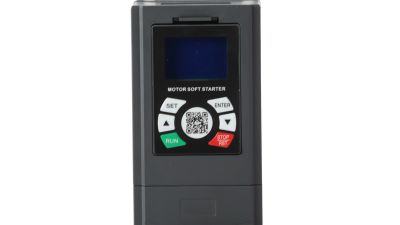
LCRVM-C Series Online Soft Starter: Affordable Motor Starting Solutions from China Suppliers & Factory

The LCRVM-C Series Online Soft Starter offers an affordable and practical solution for modern motor control applications. Designed for factories, workshops, and equipment manufacturers, it helps motors start smoothly by reducing sudden current surges and mechanical impact. This controlled starting process can support more stable equipment operation, reduce stress on connected machinery, and improve overall system performance. Its economical design makes it suitable for customers seeking dependable motor-starting technology without excessive investment.

Manufactured by experienced suppliers and factories in China, the LCRVM-C combines functional design with convenient application. It can be integrated into various motor-driven systems where controlled acceleration and reliable operation are important. The soft starter is developed to meet growing market demand for efficient, accessible, and sustainable motor-control products, while offering a practical option for upgrading existing equipment. With appropriate selection, installation, and maintenance, the LCRVM-C Series can help users optimize starting processes and support long-term operational efficiency.

FAQS

How should I choose a 7.5 kW soft starter?

Check rated current, supply voltage, starting load, and duty cycle. Do not choose by kilowatts alone. A loaded conveyor needs more starting capacity than an unloaded pump. The label is only a starting point.

Which motor protection features are essential?

Look for overload, phase-loss, under-voltage, and motor-stall protection. Match every setting with the motor nameplate. Fault history can reveal repeated trips after jams or voltage drops. Clear alarm codes save maintenance time.

Why are adjustable ramp times important?

Adjustable ramp-up and ramp-down times help control mechanical stress. A fast ramp can shock a belt and cause nuisance trips. An extremely slow ramp may overheat the motor. Finding the correct setting takes some testing.

When is current limiting useful?

Current limiting helps when the power supply is weak or cables are long. It can reduce voltage dips during starting. However, excessive limiting may prevent a loaded motor from accelerating. This trade-off is easy to overlook.

What control connections should the soft starter provide?

Useful terminals support two-wire or three-wire starting commands. Remote stop and emergency shutdown connections are also important. A local keypad lets technicians adjust ramps and check current. Opening the cabinet should not be necessary for every inspection.

Is a built-in bypass contactor worthwhile?

A bypass contactor can reduce heat during normal operation. It may also reduce cabinet wiring and running losses. Replacement can become harder if the bypass components fail. That practical risk deserves attention.

What installation conditions should I check?

Measure cabinet space and cable length before ordering. Confirm ambient temperature, ventilation, enclosure rating, and allowable starts per hour. Poor ventilation can raise internal temperature quickly. Space is often underestimated.

How can I compare total cost and reliability?

Compare purchase price, energy use, maintenance, spare parts, and technical support. Request thermal data, test procedures, and documented fault records. Review expected five-year costs, not only the invoice. My first checklist was too simple.

Conclusion

Choosing a Soft Starter 7.5 Kw requires more than matching the motor’s nominal power. A soft starter gradually increases voltage and current during startup, reducing inrush current, mechanical shock, and stress on connected equipment. Begin by checking the motor’s rated voltage, full-load current, frequency, phase configuration, starting method, load type, and required acceleration time. These details help ensure the unit can handle both normal operation and the motor’s starting duty without overheating or nuisance trips.

Next, compare essential features such as overload protection, phase-loss detection, current limiting, bypass operation, fault indication, and adjustable ramp settings. Confirm that the wiring and control terminals suit the installation, and evaluate enclosure rating, ventilation, ambient temperature, altitude, and available cabinet space. Finally, assess reliability through construction quality, motor and system compatibility, serviceability, documentation, and warranty support. A slightly higher initial cost may be worthwhile if it improves efficiency, reduces maintenance, and delivers dependable long-term operation.

Noah

Noah

Noah is a dedicated marketing professional at Zhejiang Luoka Electric Co., Ltd., where he leverages his extensive knowledge of the company's innovative products to enhance brand visibility and drive customer engagement. With a strong focus on electrical devices, Noah meticulously crafts insightful......
Previous 7 Best Soft Starter 7.5 kW Options for Motors