Hey, in today's fast-changing electrical world, it’s pretty important to find solutions you can really trust. That’s where a Soft Start Inverter comes into play — it’s actually a smart choice for many. Basically, it helps start motors gradually, easing them into action rather than jolting them on right away. This means less of that huge initial surge of current that can really stress out your equipment, helping to protect your machines and make them last a lot longer.
You see, electrical motors often pull a lot of current right at startup, which can cause wear and tear over time. By using a Soft Start Inverter, you can cut down on that stress, which not only keeps things running smoother but can also save you some money on repairs and maintenance in the long run. And, on top of that, it helps you save energy, which is a win for both your wallet and the planet.
Of course, not every single setup out there needs one. Some applications might not benefit from a Soft Start Inverter at all. So, it’s worth taking a moment to think about what your specific needs are and what your goals look like. Doing that little bit of homework can help you make a smarter investment and make sure you’re choosing a solution that actually fits your electrical system perfectly.
Understanding Soft Start Inverters and Their Functionality
Soft start inverters are essential for managing electrical loads in various applications. They help reduce startup current by gradually ramping up the voltage. This feature is crucial in protecting machinery from damage due to high initial power demands. According to industry reports, using soft start technology can decrease energy consumption by up to 30%. This efficiency not only saves money but also prolongs the lifespan of electrical equipment.
Understanding how soft start inverters function is key to optimizing their use. They work by controlling the voltage applied to motors during startup. This gradual increase minimizes torque shock, which can lead to mechanical stress. In fact, data shows that 50% of motor failures can be attributed to high starting currents. By incorporating a soft start inverter, businesses can mitigate these risks. Yet, many companies still overlook this technology, often due to unfamiliarity or initial costs.
Additionally, the selection of a reliable Soft Start Inverter Supplier is crucial. Not all suppliers offer the same quality or support. The right supplier can provide valuable insights into proper application and installation. Still, many users report challenges in finding a supplier who understands their specific needs. This gap can lead to suboptimal choices. Investing time in research may yield better outcomes and enhance overall operational efficiency.
Benefits of Using Soft Start Inverters
The Advantages of Using Soft Start Inverters in Electrical Systems
Soft start inverters are becoming essential in modern electrical systems. They provide a smooth ramp-up of power, reducing stress on components. This gradual increase in voltage minimizes the shock often experienced by motors and other equipment during startup. Consequently, it helps extend the lifespan of these devices.
Using a soft start inverter can lead to energy savings. By eliminating the high inrush currents during startup, the overall energy consumption decreases. This efficiency can significantly lower electricity bills over time. Additionally, there is less wear and tear on mechanical parts, which can result in fewer maintenance costs.
However, not every application may require a soft start inverter. Some might find them unnecessary or overly complex. Determining suitability depends on specific needs. It is always wise to evaluate if the advantages align with the operational requirements of the electrical system. Not every facility may see a noticeable benefit, and that is an essential aspect to consider.
Why Choose a Soft Start Inverter for Your Electrical Needs? - The Advantages of Using Soft Start Inverters in Electrical Systems
| Feature | Description | Benefits |
| Reduced Inrush Current | Limits the initial surge of current when starting | Protects equipment from damage and increases lifespan |
| Smooth Start | Gradual increase in voltage and current | Reduces mechanical stress on components |
| Energy Efficiency | Optimizes operational energy consumption | Lowers energy bills |
| Improved Power Factor | Increases the ratio of useful power to total power | Enhances efficiency and reduces penalties from utilities |
| User-Friendly Operation | Simple setup with adjustable parameters | Easy integration into existing systems |
Comparing Traditional Inverters with Soft Start Inverters
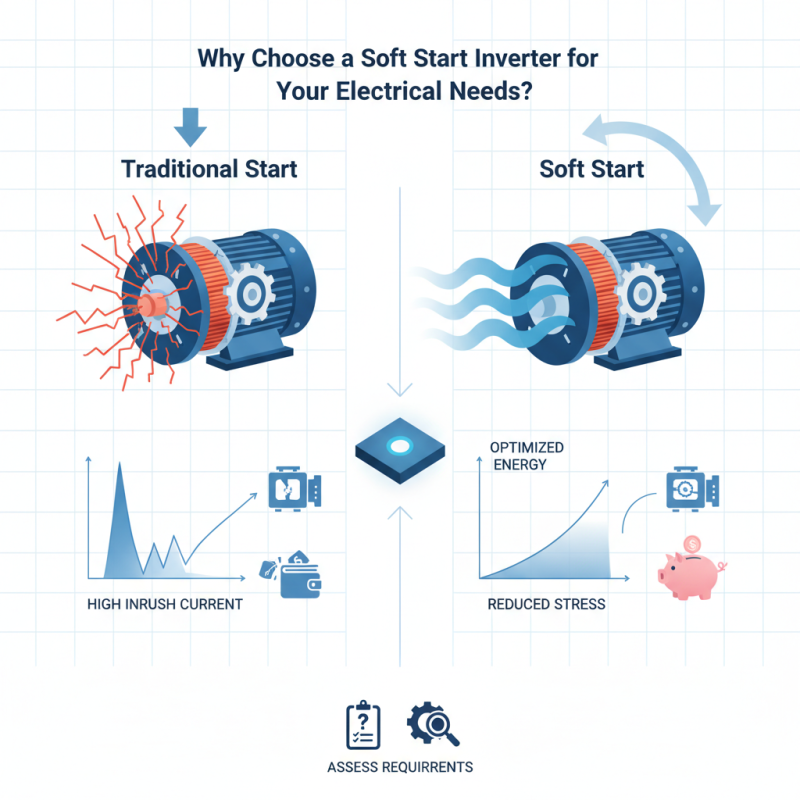
When considering electrical solutions, traditional inverters have been reliable for years. They provide power conversion effectively, but they come with some challenges. Traditional inverters can cause electrical surges that strain connected devices. This often leads to increased wear and tear. Devices might malfunction or even fail due to sudden power spikes. The absence of gradual power delivery is a significant drawback.
In contrast, soft start inverters offer a smoother approach. These devices gradually ramp up power, reducing electrical stress on equipment. This feature makes them particularly appealing for sensitive machinery. They help extend the lifespan of motors and other components. If you're working with a Soft Start Inverter Manufacturer, you can find options designed for your needs. Yet, not all applications require soft start technology. Some simpler systems might not benefit from this feature. It's essential to assess individual requirements before committing to a decision.
Applications of Soft Start Inverters in Various Industries
Soft start inverters are increasingly applied across various industries due to their efficiency and capability to manage power loads effectively. In manufacturing, they help reduce mechanical stress on equipment during startup. This leads to longer equipment life and fewer maintenance costs. A report from the Electric Power Research Institute highlights that soft start technology can decrease energy consumption by up to 30% during motor startup.
In the HVAC sector, soft start inverters are crucial. They prevent large spikes in electrical demand when large units turn on. This not only smooths out the power supply but also significantly lowers the chances of tripped breakers. As per industry analysis, HVAC systems using soft start inverters can extend their service life by around 20% due to minimized thermal and mechanical shock.
Another notable application is in the water treatment industry, where pumps often face heavy loads. The use of soft start inverters permits controlled acceleration, which lessens wear on pumps. A study indicated that integrating soft start technology can lead to a reduction in operating costs by approximately 15%. Therefore, looking for a reliable Soft Start Inverter Factory can be crucial for industries aiming to enhance their operational efficiency while minimizing risks.
Key Features to Look for in a Soft Start Inverter
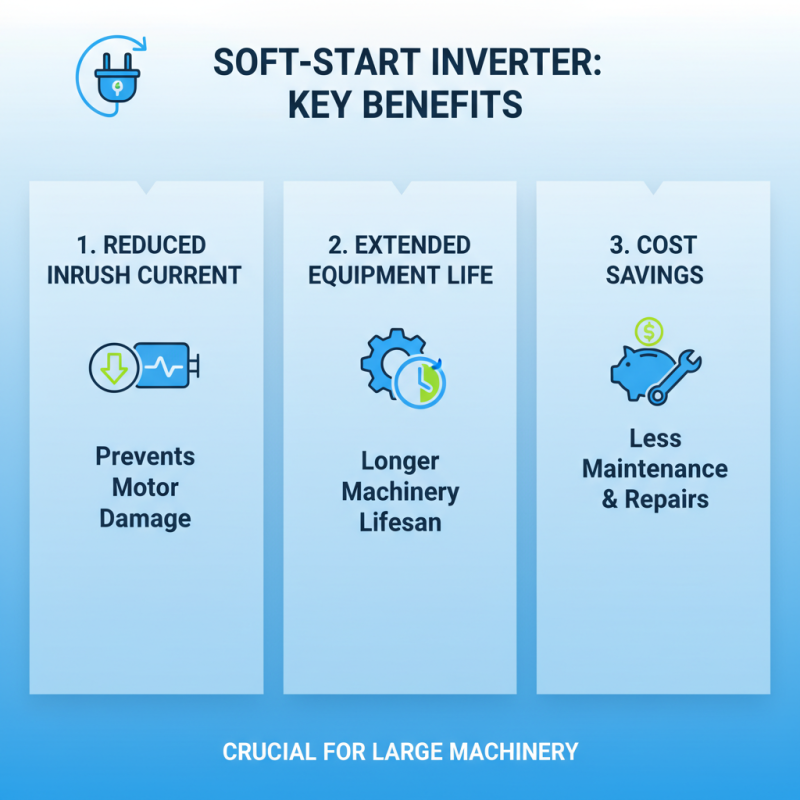
When selecting a soft start inverter, several key features stand out. One important aspect is the soft start capability itself. This feature reduces the inrush current, preventing damage to the motor. It extends the life of your equipment and saves on maintenance costs. It's crucial, especially for large machinery.
Another feature to consider is adjustable ramp-up time. This allows you to control how quickly the motor reaches its full speed. An adjustable ramp can help in various applications. If a motor starts too quickly, it can cause mechanical stress and misalignments. A thoughtfully designed ramp-up time can alleviate some of these issues.
Energy efficiency should also be on your checklist. A good soft start inverter should minimize power losses during operation. Look for models that include power factor correction. Keep in mind, not all inverters will offer the same level of efficiency. It’s worth investigating different options and asking questions. Balancing these features with your specific needs can take time. Reflection on your requirements is essential.
Installation Considerations for Soft Start Inverters
When considering installation, a soft start inverter provides unique benefits. These devices gradually ramp up the voltage and current, reducing the initial load on electrical systems. This is crucial for sensitive equipment. According to industry reports, almost 30% of motor failures can be attributed to excessive starting currents. This highlights the importance of proper installation.
However, installation can come with challenges. Precise configuration is necessary to ensure optimal performance. Many users underestimate the complexities involved. For instance, incorrect settings can negate the advantages of a soft start inverter. If not installed properly, voltage fluctuations may occur, leading to equipment damage.
In addition to technical aspects, space requirements should be assessed. Soft start inverters need adequate ventilation to avoid overheating. Data from Soft Start Inverter Factories indicates that installations often overlook this detail, leading to costly repairs. Each aspect should be carefully evaluated to maximize efficiency and longevity. Failure to do so can result in unexpected downtime and increased operational costs.
Maintenance Tips for Ensuring Optimal Performance of Inverters
Maintaining a soft start inverter is crucial for its performance. Regularly check the connections for any wear or looseness. A simple visual inspection can prevent larger issues down the line. Dust accumulation can affect efficiency. Cleaning the inverter periodically is a must. Use a soft cloth and avoid harsh chemicals.
Monitor the temperature regularly. Overheating can lead to serious damage. Ensure that there is adequate airflow around the inverter. Inadequate ventilation can reduce its lifespan.
Keep an eye on the ambient conditions, especially in industrial settings where heat levels can rise unexpectedly.
Don’t forget about software updates. Many inverters come with programmable features.
Updating the firmware can enhance functionality. Neglecting this step can leave the inverter vulnerable. Regular review of the operational settings is beneficial, even if it seems tedious.
Small oversights can lead to inefficiencies that might be costly later.
Leveraging the LCRVM-C Series Online Soft Starter: Insights from Industry 4.0 Trends and Motor Control Market Analysis
In the era of Industry 4.0, optimizing motor control solutions is essential for enhanced operational efficiency. One such solution is the LCRVM-C Series Online Soft Starter, specifically designed to cater to the rising demand for reliable and economical motor starters. This product reflects the trends of the intelligent manufacturing landscape, where advanced technology meets user-friendly operations. As industries shift towards automation and smarter processes, the importance of efficient motor control becomes more pronounced.
The LCRVM-C serves as a robust tool for businesses aiming to streamline their operations. Its design not only reduces starting current, thereby protecting the motor from potential damage, but also ensures a smooth start-up. This capability is particularly significant in applications where precision and safety are paramount. The growing trend towards automation and the continuous drive for cost-effective solutions make this soft starter a preferred choice among customers looking to enhance their motor control systems. As organizations adapt to the evolving market demands, integrating advanced starter technologies like the LCRVM-C can lead to improved productivity and operational resilience.
FAQS
: It aims to enhance user experience and simplify daily tasks.
Regular cleaning is essential. Follow the instructions for care and usage.
Yes, avoid using it near water and handle with care.
It is suitable for most users but may not fit everyone's needs.
Troubleshooting tips are available. Sometimes, issues arise from user error.
There may be a limited warranty. Check the details for coverage and duration.
Users can submit feedback through the official channels, sharing experiences can help.
Some users report minor technical glitches. Reflection on usage habits can be useful.
Instructions are usually included in the packaging or accessible online.
Assess personal needs and preferences. Some trial and error may be necessary.
Conclusion
Soft Start Inverters are designed to gradually increase power to electrical devices, minimizing inrush current and extending the lifespan of motors and equipment. By understanding their functionality, users can leverage the advantages of these inverters, such as reduced wear and tear, energy efficiency, and lower maintenance costs, compared to traditional inverters.
Soft Start Inverters find applications across various industries, from manufacturing to HVAC systems. Key features to consider when selecting a soft start inverter include compatibility with existing systems, ease of installation, and reliability under varying conditions. Proper attention to installation and routine maintenance can ensure optimal performance, making Soft Start Inverters an excellent choice for anyone seeking to enhance their electrical systems' efficiency and durability.