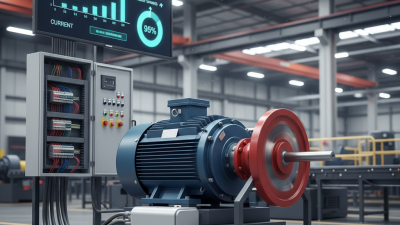
When it comes to controlling motors, managing things properly is super important if you want everything to run smoothly. You might have heard about Soft Starters—they’re pretty popular these days because they help cut down on those sudden power surges and the stress on machines. Did you know that, according to the International Electrotechnical Commission, almost 70% of motor failures are actually because of the way they’re started? Yikes! If companies take a moment to understand howSoft Starter Working, they can really boost their equipment’s performance and make it last longer. Pretty cool, right?
Basically, soft starters work by slowly increasing the voltage to the motor, so it doesn’t jerk or stall at the start. That’s not just good for the machinery; it also saves energy. In fact, research from the Energy Efficiency and Renewable Energy folks shows that proper motor control can save about 30% of energy—impressive! That said, choosing the right soft starter isn’t always as simple as it sounds. You gotta think about the specific needs of the application and the environment where it’s used.
Of course, while these devices are a game changer, they’re not foolproof. Using the wrong type or setting can mess things up and even cause equipment failures. That's why it’s often a good idea to chat with experts at places like Schneider Electric or Siemens—they can give you some solid advice. Making sure you understand the principles behind soft starters and how they fit into your setup helps keep everything running smoothly and reduces the chances of problems. Getting this right is a bit of a learning curve—there might be some bumps along the way, but regular check-ins and assessments are so worth it if you want to keep things efficient and avoid headaches down the line.
Overview of Soft Starters in Motor Control
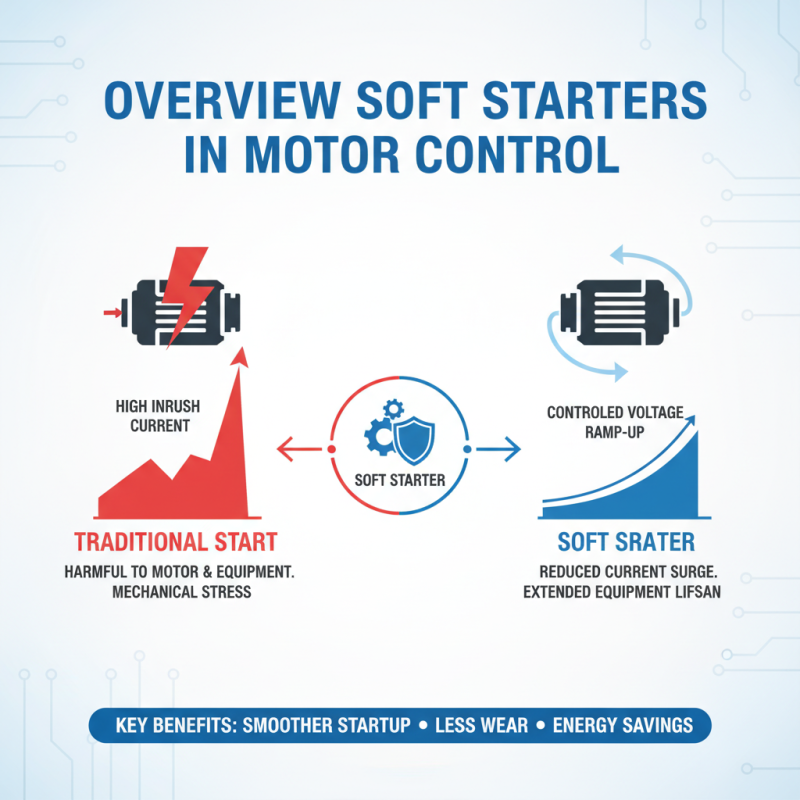
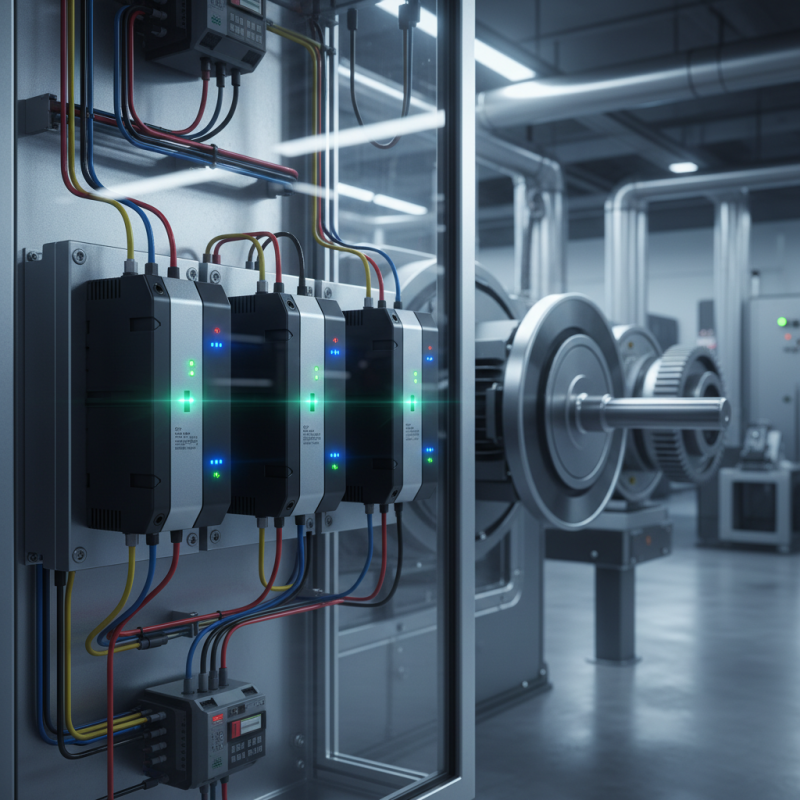
Soft starters play a crucial role in motor control systems. They regulate electrical power to motors during startup. By gradually increasing voltage, they reduce the initial surge of current, which can be harmful to the motor and connected systems. This gentle ramp-up reduces mechanical stress and extends the lifespan of equipment.
Understanding how soft starters function is essential for effective motor management. They use thyristors to control voltage and deliver a smooth start. This control mechanism limits torque, minimizing wear and tear on motor components. Ultimately, a soft starter can lead to energy savings and improved operational efficiency.
**Tips:** Installing soft starters requires careful consideration. Ensure the rated current matches your motor specifications. Regular maintenance checks are vital to avoid performance issues. Monitoring power quality can also help detect problems early, leading to smarter operational decisions.
Key Components of Soft Starters and Their Functions
Soft starters are essential for effective motor control. They help manage the starting current and reduce mechanical stress on motors. Understanding the key components of soft starters is crucial for ensuring they function correctly.
The main components include thyristors, control logic, and bypass contacts. Thyristors regulate the voltage and control the motor's acceleration. This allows for a gradual start, minimizing the inrush current. Control logic ensures that the soft starter operates efficiently, adjusting parameters based on motor requirements. Bypass contacts enhance energy efficiency by allowing full line voltage once the motor is up to speed.
Soft starters also require careful setup. Incorrect parameters can lead to performance issues. For example, setting the ramp-up time too short might cause mechanical failure. It's vital to understand the specifics of your motor and load conditions. Regular maintenance and monitoring can help identify potential issues before they escalate.
Working Principles of Soft Starters for Smooth Motor Start
Soft starters are vital for ensuring a smooth motor start. They provide control over the voltage and current supplied to an electric motor. By gradually increasing the voltage, soft starters reduce inrush current. This approach minimizes mechanical stress and electrical disturbances. Users can experience fewer maintenance issues due to reduced wear on motor components.
It’s interesting to note that not all soft starters are created equal. Different models offer various features tailored to unique applications. For instance, some may have advanced settings for different load types. Reflecting on these options requires careful consideration of operational needs. Understanding the specific demands of your motor can help in selecting an appropriate soft starter.
Another important aspect is the role of the Soft Starter Working Supplier in this context. Their expertise can guide users through the selection process. However, one might find that not every supplier offers the same level of knowledge or service. Some may not fully understand the nuances of specific applications. This can leave users feeling uncertain about their choices.
Best Soft Starter Working Principles for Efficient Motor Control
| Feature | Description | Benefits | Applications |
| Current Limiting | Limits the inrush current during motor startup to prevent electrical stress. | Reduces voltage dips and supports grid stability. | Pumps, fans, conveyors. |
| Soft Start | Gradually increases voltage supply to the motor, allowing a smooth acceleration. | Decreases mechanical stress and increases equipment lifecycle. | Industrial machinery, HVAC systems. |
| Overload Protection | Detects excessive current and disconnects the motor to prevent damage. | Enhances safety and reliability of the motor system. | Agricultural equipment, crushers. |
| Quick Reversal | Allows for rapid changes in motor direction without stalling. | Improves efficiency in processes requiring quick cycles. | Robotics, packaging machines. |
Benefits of Using Soft Starters in Industrial Applications
In industrial settings, soft starters play a vital role in motor control. They are designed to reduce the inrush current during motor startup. This feature helps in extending equipment life and minimizing maintenance costs. According to a report from the Electric Power Research Institute, using a soft starter can cut energy consumption by up to 30% during startup phases. This is a significant benefit, especially in operations with multiple motors running concurrently.
Implementing soft starters also enhances operational safety. By smoothly ramping up motor speed, they prevent mechanical stress and reduce wear and tear. A study by the International Electrical and Electronics Engineers indicated that systems using soft starters have lower failure rates, potentially reducing downtime by 20%. Despite these advantages, some industries are still hesitant to adopt this technology. There are still gaps in understanding the full benefits of soft starter implementation, necessitating further training and resources.
Many businesses are unaware of the capabilities that a Soft Starter Working Manufacturer can provide. Advanced features may include customizable ramp-up times and overload protection. This functionality allows industries to tailor motor control according to specific operational needs. However, the upfront investment in soft starters can be a point of contention, often overshadowing their long-term savings and reliability. Overcoming this perception requires industry-wide education and sharing of success stories.
Benefits of Using Soft Starters in Industrial Applications
Different Types of Soft Starters and Their Applications
Soft starters are essential for motor control, helping to reduce mechanical stress. They manage motor start-ups and prevent sudden jolts that can damage equipment. There are various types of soft starters, each suited for specific applications.
Basic soft starters offer simple functionality for standard motors. They limit current and voltage, ensuring a smoother start. This setup works well for fans and pumps. Advanced models provide features like overload protection, making them ideal for conveyors and crushers. These advanced options minimize downtime and enhance reliability.
Tips: When selecting a soft starter, consider its compatibility with your motor. Be aware of the specific requirements of your application. A mismatch can lead to inefficiency.
Another type is the built-in soft starter, which integrates directly into the motor. These units make installation easier and save space. Ideal for industrial environments, they can handle demanding applications like mixers and compressors. However, they may lack customization options.
Tips: Regularly check the settings of your soft starter. Over time, adjustments may be necessary to maintain optimal performance. Keep records to help identify trends and issues.
Installation and Configuration Guidelines for Soft Starters
When installing a soft starter, proper configuration is crucial for optimal performance. A soft starter reduces the electrical and mechanical stress during motor startup. It's essential to adhere to guidelines outlined in industry standards, such as the IEEE 519 report, which emphasizes compliance with harmonic distortion limits. Soft starters can improve the lifespan of motors by minimizing wear during start-up.
A critical step in installation involves selecting the right parameters for your specific application. Incorrect settings can lead to inefficiencies or even equipment failure. For example, the Soft Starter Working Factory must configure settings according to load characteristics. This includes configuring ramp-up and ramp-down times to match the system requirements without compromising performance.
Tips: Always verify the voltage and current ratings before installation. Also, consider the alignment of the soft starter with other components in the system to prevent misbalances. Monitoring the soft starting process helps to identify any potential issues early on. Regular maintenance should include checking the operational parameters and cleaning air filters to ensure reliable performance.
Taking time to evaluate the installation environment can offer valuable insights. Factors such as ambient temperature and humidity can affect performance. Reviewing previous installations may reveal patterns that inform future configurations, ensuring the soft starter operates within optimal parameters. Proper planning and adjustment can lead to significant energy savings and prolonged equipment life.
Common Issues and Troubleshooting Tips for Soft Starters
Soft starters are essential for controlling electric motors. Their primary function is to manage the motor's start-up process. However, issues can arise, impacting efficiency and performance. Identifying and addressing these problems promptly is crucial for optimal operation.
One common issue with soft starters is overheating. This often occurs due to prolonged use or inadequate cooling mechanisms. It's important to ensure proper ventilation is available. Additionally, check for correct sizing; a mismatch can lead to inefficiency. Another significant problem is electrical noise, which can disrupt other equipment. Installing filters may help mitigate this issue.
Troubleshooting soft starters involves several steps. Begin by inspecting connections and settings. Check for signs of wear or damage in the wiring. Regular maintenance can reveal hidden problems. Monitoring performance metrics regularly can also provide insights. Lastly, reviewing the Soft Starter Working Factories can highlight consistent issues that may not be apparent at first glance. Addressing these factors leads to a more efficient motor control system.
Understanding the Benefits and Features of the LCRV6-E Built-in Bypass Soft Starter for Efficient Motor Control
The LCRV6-E Built-in Bypass Soft Starter is engineered to enhance motor control efficiency through its innovative design features. By integrating advanced functionality, this soft starter allows for seamless operation and substantial energy savings. According to industry reports, soft starters can reduce motor starting current by up to 70%, minimizing electrical stresses on the motor and extending its lifespan. This is particularly beneficial for applications where motors are frequently started and stopped, as it helps mitigate mechanical wear and tear.
One of the hallmark features of the LCRV6-E is its built-in bypass function, which eliminates the need for external bypass contactors. This not only simplifies the installation process but also significantly reduces the overall footprint of the motor control system. Additionally, the software capabilities via shell cloud functions enable users to set parameters conveniently from both mobile and computer terminals. This modern approach to soft starter technology allows operators to manage motor performance remotely, ensuring optimal efficiency and responsiveness in various operational environments.
As businesses increasingly adopt smart solutions for industrial automation, the demand for versatile and efficient motor control devices like the LCRV6-E is growing. Reports estimate that the market for soft starters is projected to grow at a CAGR of 5.6% through the next five years, reflecting the critical role they play in energy-efficient operations. In this context, the LCRV6-E's advanced features position it as a leading choice for industries aiming to enhance their motor control systems while reducing energy consumption.
FAQS
: Soft starters manage motor starting current and reduce mechanical stress. They ensure smoother motor operation during start-up.
Key components include thyristors, control logic, and bypass contacts. Each plays a role in voltage regulation and efficiency.
Thyristors control motor acceleration by regulating voltage. This allows for a gradual increase and reduces inrush current.
Setting the ramp-up time too short can lead to mechanical failure. Understanding motor specifics is crucial.
Ensuring proper ventilation and checking for correct sizing can prevent overheating during use.
Inspect connections, settings, and wiring for wear. Regular maintenance helps reveal hidden issues.
Installing filters can help reduce electrical noise. This protects other equipment from disturbances.
Monitoring performance metrics regularly can provide insights into potential problems. Early detection leads to better efficiency.
Conclusion
Soft starter working principles are essential for understanding how these devices facilitate efficient motor control. Soft starters gradually ramp up the voltage and current supplied to an electric motor, enabling smoother starts that reduce mechanical stress and electrical surges. By incorporating key components such as control circuits and power electronics, soft starters ensure that motors can operate effectively without experiencing abrupt starts that could lead to damage.
The benefits of using soft starters in industrial applications are substantial, including lower maintenance costs and prolonged equipment life. Various types of soft starters cater to different setups and requirements, making them versatile solutions in numerous settings. Installation and configuration guidelines are crucial for maximizing their effectiveness, alongside common troubleshooting tips that can help resolve issues when they arise. Understanding these aspects of soft starter working enhances the ability to implement efficient motor control strategies across various applications.