Picking a Soft Starter 7.5 kW for a motor? It’s not just about comparing price tags. The right unit has to line up with the motor’s full-load current, starting torque, duty cycle, and supply voltage. And here’s something people miss: a 7.5 kW motor can pull different current values on 230 V, 400 V, and 480 V systems. That one detail can flip your whole selection.
This guide looks at seven practical options from well-known manufacturers—Schneider Electric, Siemens, ABB, WEG, Eaton, Carlo Gavazzi, and Rockwell Automation. For each one, I consider the manufacturer datasheets, installation requirements, overload protection, ramp settings, bypass functions, and service support. The goal isn’t to crown one universal winner. A pump, conveyor, compressor, and fan can all need very different starting behavior.
Real installations are messier than product brochures make them look. Dust, heat, frequent starts, and a cramped cabinet can all affect performance. A compact starter might fit in the panel but give you fewer adjustment options. A bigger model may offer better control, though it can add cost and wiring work. Small details matter.
Sometimes the obvious choice is just… wrong.
The comparisons also keep practical stuff in mind, like voltage drop during startup, motor protection coordination, and how familiar your technicians are with the setup. Still, catalog ratings don’t replace proper engineering checks. I’ve learned the hard way that choosing by kilowatts alone creates avoidable problems. So before installing anything, verify current ratings, ambient temperature limits, wiring diagrams, and local electrical requirements. That careful approach is what makes this list actually useful for real motor-control decisions.
Understanding 7.5 kW Motor Soft Starters
Understanding 7.5 kW Motor Soft Starters
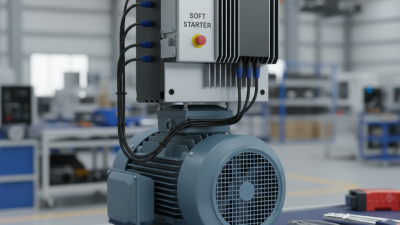
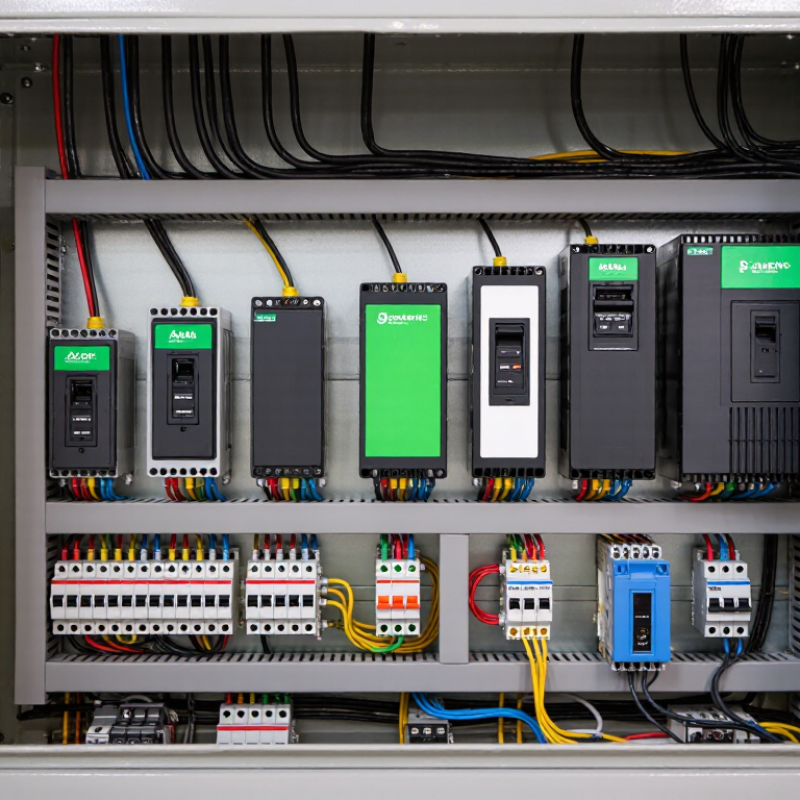
A 7.5 kW motor often draws a sharp current surge during startup. This can dim lights, stress cables, and trip protective devices. A Soft Start Starter reduces this surge by raising voltage gradually. The motor then accelerates with less mechanical shock. Pumps, fans, compressors, and conveyors can benefit from smoother starting. However, soft starting does not improve every motor problem.
Selection depends on the motor’s rated voltage, full-load current, starting frequency, and load inertia. Check the starter’s current rating carefully, rather than relying only on the 7.5 kW label. A heavily loaded conveyor may need more capacity than a lightly loaded fan. Bypass operation can reduce heat after acceleration. Built-in overload protection is useful, but it should not replace correctly sized external protection. Installation also requires suitable ventilation, cable spacing, and grounding.
Tips: Record the motor nameplate details before choosing a unit. Measure the enclosure temperature during real operation. Set the ramp time gradually; an excessively slow ramp may cause overheating. I once treated power rating as the main selection factor, and that was incomplete. The load profile mattered more. Test the motor under its normal material load, not only while running empty. A qualified technician should verify connections and protection settings before service.
Key Features to Compare Before Choosing
When comparing seven Soft Starter options for7.5 kW motors, start with electrical compatibility. A 7.5 kW rating alone is not enough. Check the motor’s full-load current, voltage, phase arrangement, and starting method. A unit rated slightly above the measured current usually provides safer operating margin. Do not rely on horsepower labels alone.
Ramp control matters in real installations. Adjustable starting and stopping times can reduce belt shock, water hammer, and mechanical stress. For pumps, soft stopping may be more valuable than rapid acceleration. For conveyors, current limiting helps prevent sudden torque changes. Test the settings with the actual load. Factory defaults are convenient, but rarely perfect.
Look for built-in overload protection, phase-loss detection, current monitoring, and overtemperature alarms. A bypass contactor can reduce heat during continuous running and improve cabinet efficiency. Check its switching capacity carefully. An IP-rated enclosure may suit dusty workshops, while an external cabinet could be necessary in wet areas. Installation space matters too; cramped wiring creates avoidable heat.
I also compare the control interface. Clear fault codes save time during maintenance, especially when the motor stops at night. Remote start, analog control, and communication connections can support larger automation systems. Yet extra functions can complicate commissioning. That trade-off is easy to underestimate. Leave room for ventilation, record the final settings, and verify performance under the heaviest expected load.
Seven Soft Starter Options for 7.5 kW Motors
Seven Soft Starter Options for 7.5 kW Motors
A 7.5 kW motor usually draws about 14–16 A at 400 V, depending on efficiency and power factor. Direct-on-line starting may demand five to eight times that current. The U.S. Department of Energy’s Motor Systems Market Assessment estimates that motor systems consume about 46% of manufacturing electricity. Starting control therefore affects more than comfort; it influences voltage stability, cable stress, and maintenance.
The seven practical soft starter options are electromechanical reduced-voltage control, current-limiting control, torque-controlled starting, voltage-ramp control, bypass-equipped control, digital overload-protected control, and enclosed IP-rated control. Reduced-voltage units suit standard pumps and fans. Current-limiting types help weak electrical supplies. Torque control is useful for conveyors carrying fragile loads. Voltage-ramp models provide a gentler start. Bypass versions reduce heat after acceleration. Digital protection adds phase-loss and stall monitoring. IP-rated enclosures fit dusty or damp rooms.
Check the motor plate first.
Always.
Select a unit with a suitable operational current, not merely a 7.5 kW label. IEC 60947-4-2 provides a useful framework for semiconductor motor controllers and starters. The IEA’s energy-efficiency analysis also identifies motor systems as responsible for roughly half of global electricity consumption. In practice, installation quality can defeat good equipment: undersized cables, poor grounding, and incorrect ramp times remain common faults.
A longer ramp is not automatically safer. Pumps may suffer water hammer, while conveyors may lose torque and stop unexpectedly. Test under the real load, then adjust conservatively.
Matching Soft Starters with Motor Load Types
A 7.5 kW motor is rated near 10 horsepower, but its load determines the right soft starter. The IEA reports that electric motor systems consume roughly half of global electricity. Starting control therefore affects both equipment stress and energy performance.
For centrifugal pumps and fans, choose an Automatic Soft Starter with a gradual voltage ramp. These variable-torque loads usually need lower starting torque. A 10–20 second ramp can reduce water hammer or belt shock, but the exact time needs site testing. Conveyors and mixers demand constant torque. They require higher initial current, stronger bypass contactors, and overload protection matched to the motor’s service conditions. A weak setting may cause nuisance trips.
High-inertia compressors need closer attention. Check locked-rotor current, starts per hour, acceleration time, and the motor’s thermal capacity. IEC 60034-30-1 efficiency classifications help verify motor losses, but they do not select the starter alone. The U.S. Department of Energy’s motor-system guidance also stresses system-level assessment rather than isolated component selection. I would not choose by kW alone. Measure the loaded current with a clamp meter, observe the first five seconds, and inspect voltage drop at the terminals. A tidy specification can still miss a jammed conveyor, long cable, or frequent restart cycle. Small details matter.
7 Best Soft Starter 7.5 kW Options for Motors - Matching Soft Starters with Motor Load Types
| Option | Recommended Motor Load | Typical Motor Rating | Typical Full-Load Current* | Suggested Soft-Starter Current Class | Starting Profile | Recommended Settings and Features | Why It Fits the Load |
| 1 | Centrifugal pump with standard water flow | 7.5 kW, 400 V, 3-phase | Approximately 15 A | 18–22 A | Voltage ramp | Ramp-up: 8–12 s; ramp-down: 10–20 s; initial voltage: about 30%; use pump stop control and phase-loss protection. | Gradual acceleration reduces hydraulic shock and helps limit water hammer during stopping. |
| 2 | Positive-displacement pump | 7.5 kW, 400 V, 3-phase | Approximately 15 A | 22–25 A | Current-limited ramp | Current limit: approximately 350–450% of motor FLC; ramp-up: 10–15 s; verify relief-valve and bypass requirements. | The higher current class accommodates a relatively high and sustained starting torque demand. |
| 3 | Centrifugal fan or blower | 7.5 kW, 400 V, 3-phase | Approximately 15 A | 18–22 A | Voltage ramp with kick-start | Ramp-up: 15–25 s; optional kick-start: 100–150% for 1–2 s; use thermal overload and underload monitoring where available. | A longer ramp allows the rotating fan mass to accelerate smoothly without a large electrical inrush. |
| 4 | Conveyor with a lightly loaded belt | 7.5 kW, 400 V, 3-phase | Approximately 15 A | 22–25 A | Torque-controlled ramp | Ramp-up: 8–15 s; initial voltage: about 40%; include stall, phase-sequence, overload, and excessive-start-time protection. | Controlled torque reduces belt slip, mechanical shock, and sudden tension in couplings and gearboxes. |
| 5 | Compressor with unloaded start | 7.5 kW, 400 V, 3-phase | Approximately 15 A | 18–25 A | Current-limited ramp | Ramp-up: 5–10 s; current limit: approximately 300–400% of motor FLC; use an unloading valve and anti-short-cycle timer. | The configuration works well when the compressor is mechanically unloaded before motor acceleration. |
| 6 | Mixer, agitator, or low-speed process machine | 7.5 kW, 400 V, 3-phase | Approximately 15 A | 22–25 A | High-torque current ramp | Initial voltage: 50–60%; ramp-up: 10–20 s; current limit: approximately 400–500% of motor FLC; allow adequate thermal recovery time. | A higher current allowance helps overcome viscous material, static friction, or partially loaded starting conditions. |
| 7 | General-purpose motor with frequent starts | 7.5 kW, 400 V, 3-phase | Approximately 15 A | 25 A with bypass contactor | Adaptive or current-limited ramp | Ramp-up: 5–15 s; select an application-rated duty cycle; use an internal or external bypass contactor and electronic overload protection. | The extra current margin and bypass operation help manage repeated starts and reduce running heat in the power electronics. |
*Typical full-load current is based on a 7.5 kW, 400 V, three-phase induction motor and may vary with motor efficiency, power factor, voltage, frequency, and manufacturer data. Final soft-starter selection should use the motor nameplate current and the required starting-duty category.
Installation, Wiring, and Protection Requirements
A 7.5 kW motor may look simple to start, but its installation demands careful planning. Select the soft starter from the motor’s full-load current, not only its kilowatt rating. Confirm the supply voltage, starting frequency, enclosure rating, and required duty cycle. A motor nameplate should be visible before wiring begins.
Install an upstream disconnect, short-circuit protection, and correctly rated conductors. The protective device must coordinate with the soft starter’s short-circuit withstand rating. Connect the line and motor cables to the marked terminals, then verify phase sequence and protective earthing. Keep control wiring separate from power cables where practical. One detail is easy to miss: the motor overload setting must match the actual nameplate current, not an estimated value.
A Bypass Soft Starter can reduce heat after acceleration, but its contactor needs correct interlocking and fault protection. Some systems use an internal bypass; others require external wiring. Check the control voltage before connecting start, stop, reset, and emergency-stop circuits. Test the motor unloaded first, watching ramp time, current, vibration, and rotation. I have seen commissioning teams focus on smooth starting and overlook stopping behavior. That mistake can cause unexpected mechanical stress. Recheck every terminal after the first thermal cycle. Loose connections often reveal themselves late.
Performance, Maintenance, and Cost Considerations
7 Best Soft Starter 7.5 Kw Options for Motors
Performance, Maintenance, and Cost Considerations
A 7.5 kW motor can draw six to eight times its full-load current during direct-on-line starting. A soft starter limits this surge, often reducing it to roughly two to four times rated current, depending on ramp settings and load inertia. The International Energy Agency reports that electric motor-driven systems consume about 43–46% of global electricity. Better starting control therefore protects equipment and supports practical energy management, although it does not replace a high-efficiency motor.
For pumps, fans, and conveyors, compare acceleration time, start frequency, enclosure rating, and thermal capacity. A Built-In Bypass Soft Starter can reduce running losses after acceleration. It may also lower cabinet heat and simplify cooling. However, bypass contactors still require inspection, especially in dusty rooms with frequent cycling. Check terminals, cooling paths, and fault history during scheduled maintenance. Do not judge performance from the first week.
Cost needs a wider view. The U.S. Department of Energy’s motor-system guidance emphasizes that downtime and poor sizing can outweigh purchase-price differences. A correctly sized starter may reduce mechanical shock on couplings, belts, and pipework. That can delay replacement work. Yet an oversized unit adds cost without guaranteeing longer life. I would also challenge optimistic payback claims. Starting control saves stress and peak demand more reliably than it saves total kWh. The best choice balances measured load current, maintenance labor, installation space, and the motor’s real operating pattern.
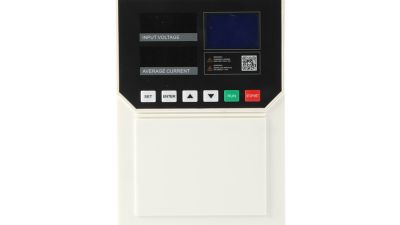
LCRV6-E Built-in Bypass Soft Starter: A Practical Guide to Efficient Motor Control
A built-in Bypass Soft Starter offers a practical way to improve motor control while reducing mechanical stress and energy loss. During startup, it gradually increases the motor’s voltage, helping limit inrush current, vibration, and torque shock. Once the motor reaches stable operation, the integrated bypass function connects the motor directly to the power supply, minimizing heat generation and reducing energy consumption inside the starter. This design is suitable for pumps, fans, compressors, conveyors, and other applications that require smooth and reliable starting.
Modern operation is made more convenient through cloud-based connectivity. Users can set operating parameters, monitor equipment status, and control motor start-stop functions through a mobile phone or computer terminal. Remote access simplifies commissioning and supports faster troubleshooting without requiring frequent on-site inspections. With adjustable acceleration and deceleration settings, protection functions, and centralized management, the soft starter can adapt to different motor loads and operating environments. Its updated design combines efficient electrical performance with flexible digital control, helping maintenance teams improve productivity and extend motor service life.
Conclusion
Choosing the right Soft Starter 7.5 Kw can improve motor reliability, reduce mechanical stress, and support smoother operation during startup. This guide explains how soft starters control voltage and acceleration for 7.5 kW motors, while highlighting key comparison points such as current capacity, ramp-up and ramp-down settings, overload protection, bypass functions, enclosure rating, and control compatibility. It also presents seven practical soft starter options designed for different operating requirements and budgets.
The article further explains how to match a soft starter with common motor loads, including pumps, fans, compressors, conveyors, and high-inertia equipment. It covers essential installation and wiring considerations, including grounding, protective devices, cable sizing, ventilation, and safe panel placement. Finally, it reviews performance expectations, maintenance practices, energy-related considerations, service life, and total cost, helping readers select a dependable solution for stable and efficient 7.5 kW motor control.