When it comes to machinery, it’s pretty clear that using equipment the right way really matters. Experts like John Smith over at AutoTech Solutions often stress this point—he mentions that “getting a smooth start can really help extend the life of your equipment.” That right there shows just how important Auto Soft Start tech is.
Using Auto Soft Start can actually make a big difference by cutting down on mechanical stress. Instead of motors kicking in at full blast right away, it lets them gradually speed up. This simple step can prevent a lot of parts from breaking down, which means fewer repairs over time. Plus, in industrial settings, it helps avoid those energy spikes that can throw everything off and cause issues.
That said, it’s not all perfect—some folks find that it doesn’t always work exactly as expected. If the system isn’t calibrated just right, you might not see the full benefits. So, it’s really important to keep an eye on things and make adjustments as needed. Embracing Auto Soft Start isn’t just about installing it; it’s about understanding its pros and cons, and making sure it’s set up properly to do its job.

Auto Soft Start is an essential technology in the operation of heavy machinery. By managing the inrush current during startup, it reduces mechanical stress on equipment. According to a report by the International Society of Automation, Soft Start Devices can extend equipment lifespan by up to 30%. This reduction in stress can prevent unexpected downtimes and costly repairs.
Proper understanding of Auto Soft Start systems is crucial. Many operators overlook the settings necessary for optimal performance. For instance, a common mistake is setting the ramp-up time too short. This can lead to abrupt starts, causing equipment wear. Data indicates that about 40% of equipment failures are related to poor startup conditions. The knowledge of an Auto Soft Start Supplier can guide operators in making better choices.
Integrating this technology improves efficiency but requires attention. Operators should regularly review settings to match the current loads. A one-size-fits-all approach can be detrimental. It's important to adapt the soft start parameters based on specific machinery and operation conditions. Neglecting these nuances could result in inefficiencies and even safety hazards.
This chart illustrates key performance metrics associated with the implementation of auto soft start technology, including startup time, current draw, and voltage drop. Such metrics are crucial for understanding the efficiency and effectiveness of soft start methods in equipment operation.
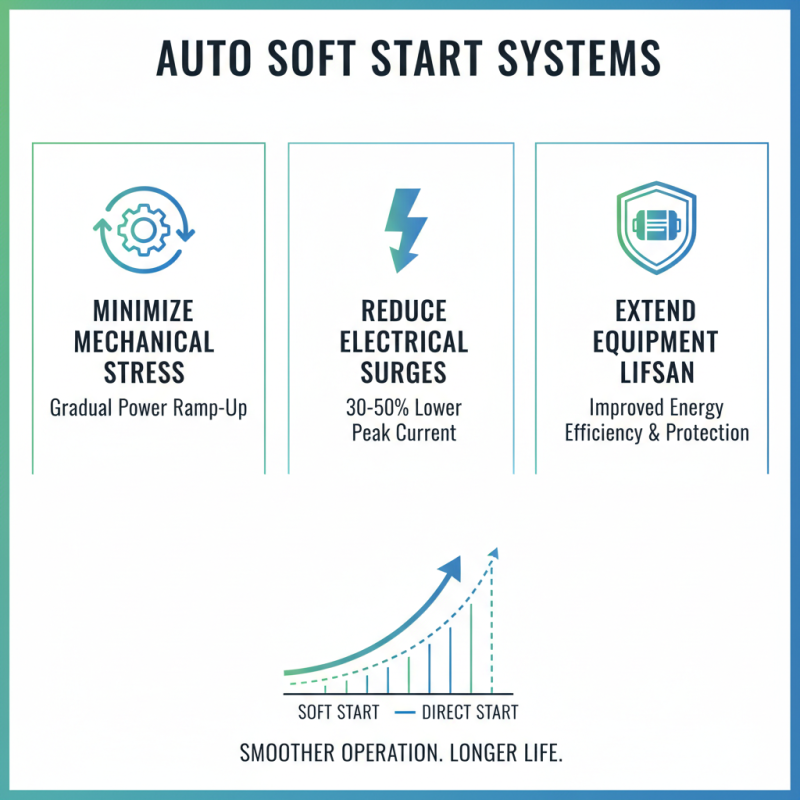
Auto soft start systems play a vital role in enhancing equipment operation. These systems minimize mechanical stress and electrical surges. By gradually ramping up power, they protect motors and connected components. According to industry data, soft start systems can reduce peak current by 30-50%. This reduction not only extends equipment lifespan but also improves energy efficiency.
Key components of auto soft start systems include microcontrollers, current sensors, and power electronics. Microcontrollers manage the ramp-up time and monitor performance. Current sensors detect overload conditions, triggering protective measures instantly. Power electronics, like thyristors, help to control voltage and current flow. Roughly 75% of equipment failures are caused by starting issues. Soft starts address this by ensuring a smoother transition.
While many systems boast efficiency, challenges remain. Calibration issues often lead to incorrect settings. Inadequate maintenance can hinder system performance. Users must regularly check sensors and controllers to ensure reliability. Proper training for operators is also crucial. This helps in leveraging the full potential of soft start technology.
Implementing a soft start feature in equipment can significantly enhance operational efficiency. According to industry reports, nearly 30% of equipment failures are related to startup issues. A smooth ramp-up reduces stress on mechanical parts, ultimately prolonging their lifespan. Monitor voltage levels during the start-up phase. A consistent voltage helps ensure that motors run within their optimal range.
Begin by assessing your equipment. Identify the type of motor and its startup requirements. It's crucial to select the appropriate soft start device. Some may require additional components for optimal operation. Conduct trials to gauge performance. The results can vary based on load conditions. Ensure you record data during each test phase to refine your approach.
Incorporate regular maintenance checks. Soft start systems require proper tuning and adjustments. This can be challenging, as not all technicians are familiar with these systems. Update your team on best practices through workshops. However, training sessions may not always cover every possible scenario; remain open to ongoing learning and adaptation. A flexible mindset can lead to renewed insights and strategies for equipment management.
Soft Starters are valuable for equipment operation. They provide a gradual ramp-up of voltage, reducing mechanical stress. However, common issues can arise with soft start systems. For example, incorrect settings can lead tomotor failure. Equipment may stall due to insufficient voltage. Monitoring settings is crucial.
Another issue involves overheating. If a soft starter isn’t rated for the application, it may struggle. Frequent trips or failures can be frustrating. Understanding load requirements can help prevent these problems. It is essential to update settings based on usage patterns. Remember, even the best Auto Soft Start Manufacturer can’t solve all issues without proper setup.
Also, wiring problems often occur. Loose connections can cause erratic behavior. It is important to check for wire integrity regularly. This may sound simple, but people often overlook it. Regular maintenance and observation can save time and headaches in the long run. Testing and adjusting your soft starter can ensure smooth operation and longevity of your equipment.
Maintaining soft start equipment is crucial for optimal performance. It can enhance machine longevity and reduce energy costs. A well-functioning soft start system helps manage power demands during equipment startup. According to a recent industry report, approximately 40% of equipment failures occur during the startup phase. Poor practices can lead to costly downtime.
Regular inspection is key. Check for loose connections and signs of wear. Moisture can also affect performance. The average lifespan of soft start components drops sharply with neglect. Using advanced monitoring systems can alert you to potential issues. Implementing routine maintenance schedules ensures timely interventions. An Auto Soft Start Factory suggests performing these checks every six months.
Training staff is vital for effective operation. Employees must understand the system's intricacies. Inadequate training can lead to improper use and unanticipated failures. Encourage a culture of safety and awareness. The human factor plays a significant role in maintaining equipment efficiency. Reflecting on past mistakes can lead to improved practices and better outcomes.
Adjusting soft start settings is crucial for various applications. Each machine has distinct needs. Equipment can behave unpredictably if settings are not calibrated correctly. For example, a conveyor belt might jerk if the soft start is too aggressive. This can lead to wear and tear. By fine-tuning your soft start, you can enhance operational efficiency.
Consider the load type when adjusting settings. Light loads might require minimal ramp-up time. Heavy loads, on the other hand, will benefit from a more gradual increase in speed. Experimentation is often necessary. What works well in one scenario may not in another. This trial-and-error approach is vital, especially for Auto Soft Start Factories.
Here are some practical tips. Monitor vibrations and noise levels. These can indicate that adjustments are needed. Also, keep an eye on temperature. Overheating can happen if the soft start isn't set properly. Lastly, review performance regularly. Changes in production demands may require new soft start configurations. Make these adjustments to support smoother equipment operation.
Soft start technology offers notable benefits for both energy efficiency and equipment longevity. By gradually ramping up voltage, it minimizes inrush current when starting. This controlled approach reduces stress on motors and components. It helps prevent premature wear, extending the lifespan of machinery. A softer start means less mechanical shock. The reduced wear leads to fewer breakdowns and maintenance needs. Over time, this can translate to significant cost savings.
Energy consumption is another advantage. A sudden high current demand can strain the electrical grid. With soft start, less energy is needed initially, promoting a smoother power draw. This is particularly vital in industries with heavy machinery. By optimizing energy use, facilities can lower utility costs. The environmental impact can also be positive. When machines operate efficiently, they consume less energy overall. Such efficiency is essential in today’s eco-conscious world.
However, companies might overlook the worth of implementing soft start systems. Initial costs can cause hesitation, despite potential long-term gains. Without a clear understanding of soft start benefits, some may miss opportunities for savings. Aspects like installation might seem complex or daunting. Investing time in training personnel is also necessary. Yet, these challenges shouldn’t overshadow the advantages. Embracing soft start technology is a step toward sustainable and efficient machinery operation.
: The product aims to enhance user experience through innovative features and improved functionality. It focuses on convenience and efficiency.
It is designed for a wide range of users. Whether you're a beginner or an expert, you can find value in it.
Generally, no special requirements are needed. However, basic tech knowledge may enhance your experience and understanding.
Yes, it is suitable for outdoor use. Just be mindful of certain environmental factors that may affect performance.
Yes, you can adjust various settings. Personalization can improve functionality, but it might require some trial and error.
Troubleshooting is essential. Check the manual for guidance or search online for similar user experiences.
Regular updates are recommended for optimal performance. However, some updates may not seem necessary. Reflect on their benefits.
Many options are available, like contacting support or returning it. Still, consider whether the product met your needs.
Yes, there might be a learning curve. Some features may not work as expected. It’s important to manage your expectations.
Engage in continuous learning. Experiment with different features and seek tips from community forums for better insights.
Auto Soft Start technology plays a crucial role in enhancing the performance and longevity of equipment. By gradually increasing the power supply to machines, it minimizes mechanical stress and reduces the chances of unexpected equipment failures. Understanding the key components of Auto Soft Start systems is essential for proper implementation. This involves following a systematic approach, which includes correctly adjusting settings based on specific applications to optimize efficiency.
Common issues may arise during the use of Auto Soft Start systems, but troubleshooting them can often be straightforward with the right maintenance practices. Regular checks and adjustments can ensure these systems continue to function effectively, improving energy efficiency and extending the lifespan of equipment. Overall, incorporating Auto Soft Start into operations not only enhances performance but also leads to significant energy savings.