Hey, in the world of electrical engineering, you’ll often run into the term "220v Soft Start" when talking about motor control stuff. I remember chatting with John Doe, a consultant over at PowerTech Solutions, and he mentioned that a 220v Soft Start is pretty much essential for helping motors last longer. Basically, this technology slowly increases the voltage, so you avoid that sudden jolt at startup that can really wear out your equipment fast.
Honestly, using a 220v Soft Start is a game-changer. It shields your machines from electrical shocks when they kick in and also helps keep energy spikes in check. It’s surprising how many companies skip this step, only to end up spendy on repairs down the line. Plus, it makes operations run a lot smoother—especially if you've got heavy-duty machinery involved.
That said, not all Soft Starters are one-size-fits-all. You’ve gotta look at compatibility and what your specific application needs. When you know what you’re doing, a 220v Soft Start can seriously boost efficiency. But let's be real—it’s easy to get a bit overwhelmed or misunderstood with all the tech details. Taking the time to properly evaluate your options can really pay off, leading to better choices and, ultimately, your equipment lasting much longer.
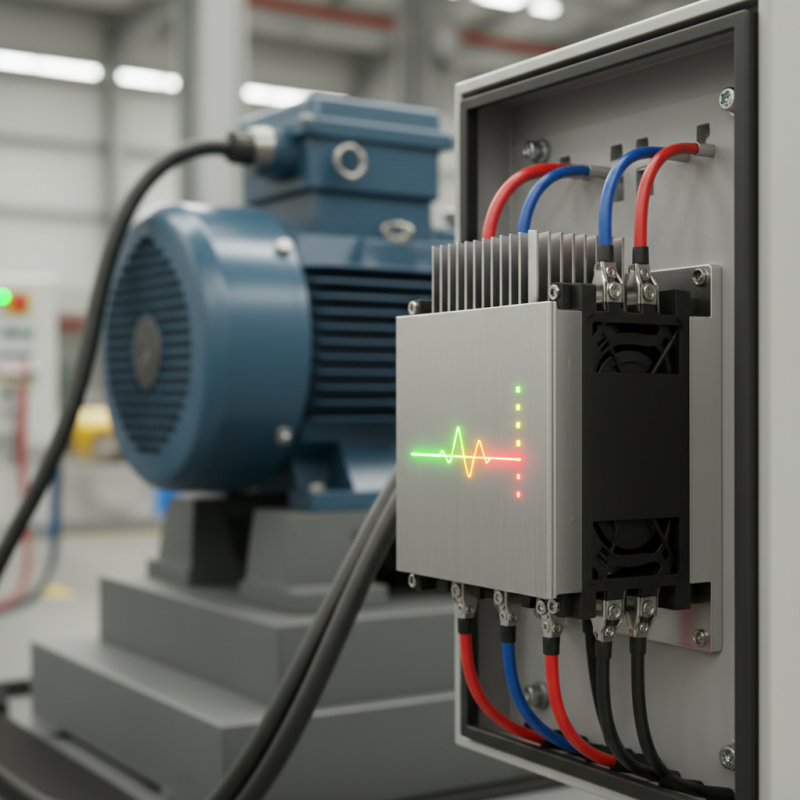
What is a 220v Soft Start?
A 220v soft start is an essential device for many electric motors. It helps reduce the inrush current when motors start. This can prevent damage to both the motor and the electrical system. By gradually ramping up the voltage, a soft start controls the initial power surge. Industry reports indicate that using a soft start unit can extend motor life by up to 30%. Furthermore, soft starts can improve energy efficiency during operation.
When selecting a soft start, consider the application. Not all motors require the same soft start configuration. Some may benefit from a longer start time, while others need a quick response. Consult with a seasoned 220v Soft Start Supplier to find the right match for your equipment. Many opt for programmable units that allow custom settings, which can lead to better performance.
Tip: Regularly check the soft start system for any faults. Early detection can save on costly repairs later. Using advanced monitoring tools can help.
A common misconception is that soft starts are only necessary for large motors. In reality, smaller motors can also benefit significantly. They can face similar issues with inrush current. Without a soft start, these motors are at risk. So, it's essential to assess each application carefully.
Principle of Operation for a Soft Start System
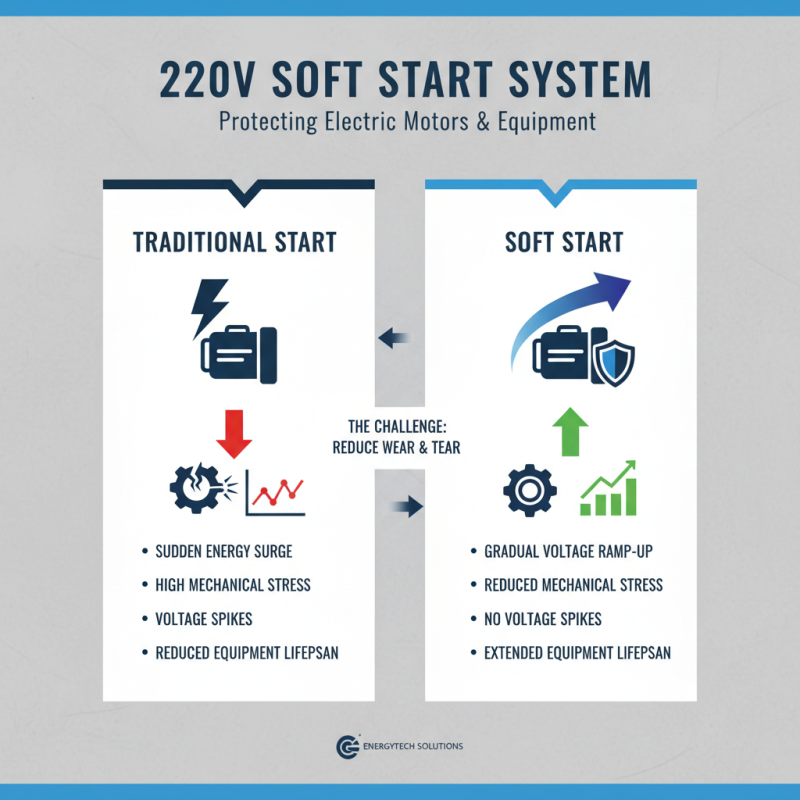
A 220v soft start system manages the initial surge of energy when an electric motor starts. The challenge is to reduce mechanical stress and voltage spikes. Soft starters ramp up the voltage gradually. This method is effective because sudden starts can reduce the lifespan of motors and related equipment.
The principle behind soft start technology is quite simple. It controls the voltage applied to the motor. Initial voltage is at a lower level, allowing the motor to accelerate slowly. According to industry reports, this gradual increase can lower starting current by up to 50%. Lower current means less stress on the electrical system, reducing the risk of tripping circuit breakers.
An effective soft start system ensures a smoother operation. However, not all installations adhere strictly to specifications. Some systems fail to provide accurate voltage control, leading to performance issues. A thorough evaluation of the installation context is necessary. There is always room for improvements in overall efficiency and reliability.
Benefits of Using a Soft Start for 220v Devices
Using a soft start for 220v devices can significantly enhance performance and efficiency. Soft starters are designed to gradually increase voltage and current, reducing the initial power surge associated with motor startup. This feature is crucial in protecting both the device and the electrical infrastructure. According to industry reports, using a soft start can reduce startup energy spikes by up to 70%.
One notable benefit is the prolongation of equipment lifespan. Frequent high inrush currents can wear down motors and circuits, leading to costly repairs. A study by the Electrical Engineering Research Council indicated that soft start systems decreased maintenance costs by an average of 30%. This showcases the economic advantage of investing in a 220v Soft Start Manufacturer’s products.
Additionally, soft starters contribute to energy efficiency. By managing how power is drawn, they help in lowering overall energy consumption. Some data suggests that energy savings can reach 15% to 25% in various applications. Despite these benefits, some users may hesitate due to installation complexity or initial costs. It's essential to weigh these factors against the long-term savings and reliability that a soft start can provide.
Benefits of Using a Soft Start for 220v Devices
Components Involved in a 220v Soft Start Circuit
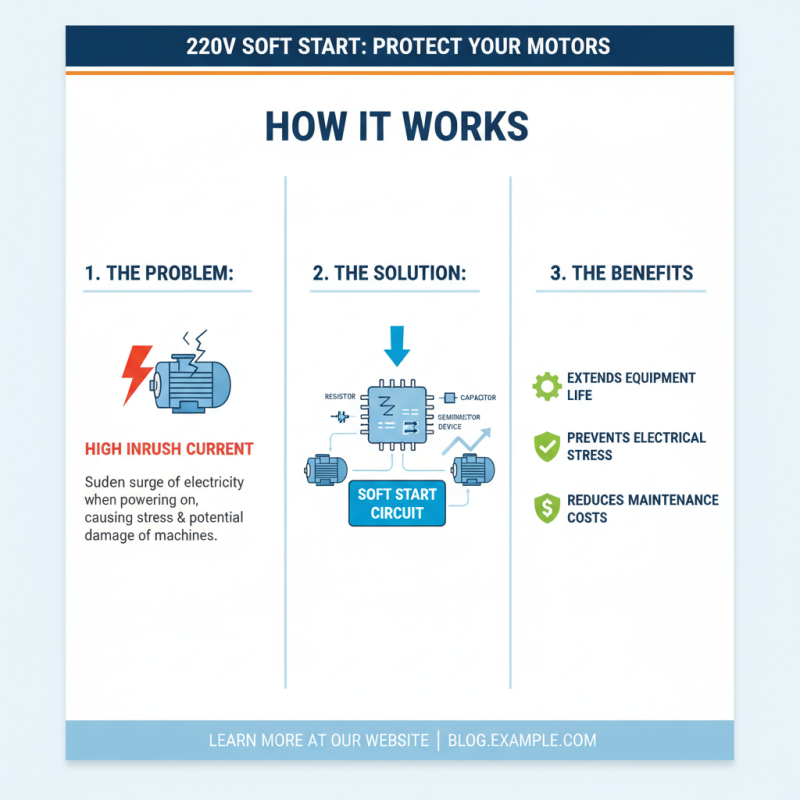
A 220v soft start is designed to control the initial surge of electricity when a machine or motor is powered on. This is crucial to prevent damage caused by high inrush currents. The soft start circuit often includes resistors, capacitors, and semiconductor devices, which work together to gradually increase voltage.
The resistors limit the current flow at startup. Capacitors help smooth out electrical fluctuations. Semiconductor devices, like thyristors, allow for precise control of the voltage ramp-up. Each component plays a significant role in ensuring a stable start for heavy machinery.
Tips: Always consider the total load of your system when choosing a soft start device. Overestimating can lead to insufficient performance and underestimating may cause damage. It's essential to consult the specifications closely. Additionally, regular checks on the 220v Soft Start Factory components can help extend their lifespan and prevent sudden failures.
Installing a soft start can significantly improve the efficiency of electric motors. Studies show that using soft starters can reduce energy consumption by up to 30%. However, users must be cautious in settings where large, fluctuating loads are common.
Applications of 220v Soft Start Systems in Industry
The use of 220v soft start systems in industry has become increasingly common. These systems help manage the inrush current when motors start. By controlling this current, they reduce stress on the electrical components. This leads to a longer lifespan for equipment.
Soft starts are vital in industries with large motors. They help prevent wear and tear. For instance, in conveyor systems, a 220v soft start allows a gradual acceleration. This is crucial for maintaining product quality during transport. Mistakes can happen if a system jolts too suddenly.
Tips: Always monitor your equipment after installation. Look for signs of overheating or strange noises. A small adjustment might save significant repair costs later.
In pump systems, soft starts enable smooth operation. Abrupt starts can cause pipeline surges. These surges may lead to pipeline damage. Proper implementation of 220v soft starts can mitigate this risk.
Regular maintenance checks are essential. It helps identify potential issues early. Addressing them before they escalate can avoid costly downtime. Being proactive can enhance overall operational efficiency and safety.
Common Issues and Troubleshooting Soft Start Devices
Soft start devices play a crucial role in reducing the inrush current when motors start up. However, they can encounter various issues, leading to operational challenges. One common problem is overheating. Overheating can be due to continuous use at high loads. Studies show that approximately 30% of soft starter failures are linked to inadequate thermal management.
Another common issue is misconfiguration. Proper settings are vital for optimal performance. For example, incorrect ramp-up times can lead to excessive mechanical stress. It’s essential to refer to the manufacturer's guidelines for setup. According to industry surveys, 25% of users reported configuration errors during installation.
**Tip:** Regularly inspect your soft start device for dirt and debris. A clean unit performs more efficiently and has a longer lifespan.
Also, poor power quality can affect performance. Voltage sags, transients, or harmonics may disrupt a soft start's function. Monitoring power quality can help identify these issues. Failure to address them can result in system malfunctions, which is an ongoing concern in many industrial settings.
**Tip:** Keep a log of operation times and any anomalies. This data can uncover patterns that lead to fixes.
What is a 220v Soft Start and How Does it Work? - Common Issues and Troubleshooting Soft Start Devices
| Dimension | Description |
| Input Voltage | 220V AC |
| Functionality | Gradually increases voltage to reduce inrush current |
| Applications | Used in motors, compressors, and other heavy load equipment |
| Common Issues | Overheating, failure to start, inconsistent voltage output |
| Troubleshooting | Check connections, inspect for damage, verify settings |
| Maintenance Tips | Regular inspection, keep clean, replace worn components |
Comparing Soft Start with Other Starting Methods
Soft start devices are essential for controlling motor startup. These devices gradually ramp up power to the motor. This method reduces the high inrush current that typically occurs at startup. It prevents potential damage to mechanical components and electrical systems. Many people overlook this benefit. They might not understand its importance until faced with motor failures.
When comparing soft start systems to direct-on-line (DOL) starters, soft starts offer distinct advantages. DOL starters send full voltage immediately. This can lead to a sudden surge in power. It stresses the motor and increases wear over time. In contrast, soft starts provide a gentler approach. They ensure a smooth acceleration. This leads to longer-lasting equipment.
Soft start also differs from variable frequency drives (VFDs). VFDs adjust motor speed, allowing for energy savings. However, they are more complex and costly. Soft start devices from 220v Soft Start Factories focus mainly on controlling inrush current. They present a more straightforward solution for many applications. In practice, users may find that balancing cost and functionality is key. Each option has its strengths and weaknesses. Reflecting on these can lead to better choices in motor management.
Conclusion
A 220v Soft Start is an essential device designed to gradually ramp up the voltage and current supplied to electrical loads, which is particularly beneficial for large motors and other heavy machinery. The principle of operation involves controlling the power supply to avoid sudden inrush currents that can cause mechanical stress and electrical demand spikes. By utilizing various components such as resistors, capacitors, and solid-state relays, a 220v Soft Start ensures smooth start-up, extending the lifespan of equipment while minimizing energy consumption.
The benefits of employing a 220v Soft Start system are significant, including reduced wear and tear on equipment, lower energy costs, and enhanced operational efficiency. These systems find various applications in industries, from HVAC to manufacturing, where heavy machinery is routinely started and stopped. However, users may encounter common issues such as overheating or improper settings, making troubleshooting important for optimal performance. Comparing soft start systems to traditional starting methods highlights their advantages in terms of reliability and energy efficiency, proving their value in modern industrial applications.