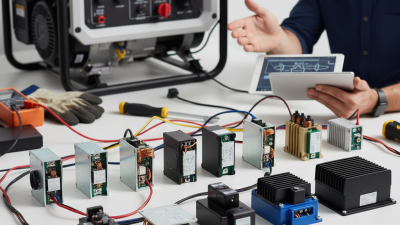
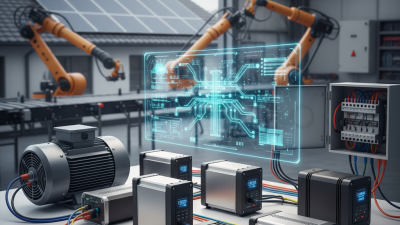
Lately, you've probably noticed that Generator Soft Start has been gaining a lot of attention across different industries. It’s one of those tech upgrades that isn’t just about boosting performance but also about making generators last longer. Essentially, it helps by easing the initial power surge when starting up, which means equipment gets going more smoothly and efficiently. Pretty neat, right?
And honestly, the benefits are pretty obvious. A gentle startup means less wear and tear over time, which translates into fewer maintenance headaches and costs in the long run. But surprisingly, some folks don’t really realize just how much this little tech can make a difference in their daily operations.
You see, Generator Soft Start isn’t just for one type of job — it’s used pretty much everywhere. From busy construction sites to massive data centers, having reliable power management is key. It actually means less downtime and more productivity overall. But, here’s the thing — it’s not a one-size-fits-all situation. Companies need to think carefully about their specific needs before jumping in. It’s worth taking some time to really consider if it’s the right fit for them before making the investment.

Overview of Soft Start Technology in Generators
Soft start technology has gained prominence in the generator industry. It allows the generator to start gradually, reducing mechanical stress. This technology lowers the initial surge of current. By minimizing the jolt, it protects the generator's components effectively. Moreover, generators that incorporate soft start mechanisms can operate more reliably.
When a generator starts abruptly, it can lead to wear and tear. Regular abrupt starts may decrease its lifespan. The Soft Start For Generator systems can help mitigate this issue. Soft start technology is especially beneficial in applications where sensitive equipment is in use. It ensures that power delivery is stable and consistent during the start phase. However, not all systems may need soft start functionality.
Installations can be costly, and not all operators recognize the potential benefits. Some may overlook these advantages due to initial investment concerns. Users must weigh the cost against the long-term savings in maintenance and efficiency. It’s essential for operations to reflect on the importance of soft start features in achieving optimal performance.
Key Benefits of Using Soft Start in Generator Operations
Soft start technology in generator operations brings numerous benefits that enhance performance and reliability. One of its key advantages is the reduction of inrush current during startup, which can prevent damage. A generator without a soft start may experience sudden spikes in power, stressing the internal components. This can lead to costly repairs and downtime. By employing Ac Soft Start For Generator applications, operators can significantly enhance machinery lifespan.
In addition to reducing inrush current, soft start systems provide smoother acceleration. This gradual ramp-up helps in maintaining stability, especially in sensitive environments. It can also prevent voltage dips that disrupt connected equipment. Maintaining consistent power levels improves overall operational reliability. Operators should consider this when thinking about generator set-ups.
**Tip:** Regularly inspect your soft start system. Any malfunction can negate the benefits. A simple check can save money in the long run. Moreover, properly sized Soft Start Controllers are essential. An oversized unit may not function efficiently. Balancing needs with equipment capability is crucial for optimal performance.
2026 Top Generator Soft Start Benefits and Applications
| Benefit | Description | Application | Industry |
| Reduced Inrush Current | Minimizes stress on generator components by controlling the inrush current during startup. | Startup of large motors and heavy machinery. | Manufacturing, Mining |
| Enhanced Equipment Lifespan | Extends the lifespan of both the generator and connected equipment by reducing mechanical stress. | Continuous operations in factories. | Industrial, Energy |
| Improved Efficiency | Soft start systems increase overall operational efficiency by reducing energy waste at startup. | Power generation and distribution. | Utilities, Renewable Energy |
| Noise Reduction | Reduces noise levels during startup, making operations more environmentally friendly. | Urban construction and maintenance projects. | Construction, Urban Planning |
| Protection Against Voltage Drops | Reduces the risk of voltage drops affecting other equipment during generator startup. | Simultaneous startup of multiple machines. | Mining, Agriculture |
Applications of Soft Start in Various Industries
Soft Starters have become essential in various industries. They reduce the initial current surge when electric motors start. This feature is vital in applications that require gradual acceleration. In factories, for instance, heavy machinery benefits significantly. Soft starts minimize mechanical stress on equipment. This leads to longer service life and reduced maintenance.
In the HVAC industry, soft starters enhance operational efficiency. Air conditioning systems use them to manage compressor starts. By controlling the start-up process, these systems increase energy savings. Soft starters can also be found in water treatment plants. They help pumps avoid extreme loads during start-up.
Even in the mining sector, soft starters contribute to safety. They lower startup torque, minimizing the risk of equipment failure. Moreover, industries dealing with conveyor systems rely on soft starters. These devices enable smoother operation. However, an over-reliance on this technology can mask underlying issues. Regular checks are necessary to ensure equipment operates efficiently. Adapting to these technologies poses challenges, but the benefits are clear.
2026 Top Generator Soft Start Benefits and Applications
The chart below illustrates the various applications of soft start technology in different industries for 2026. The data highlights the percentage of usage across sectors, showcasing how soft start systems enhance performance, reduce maintenance costs, and improve operational efficiency.
Technical Principles Behind Generator Soft Start Systems
Generator soft start systems are essential for smooth operations. They control the initial voltage and current supplied to a generator. This process minimizes stress on the electrical components during start-up. By gradually ramping up the power, these systems reduce mechanical wear and enhance longevity.
Studies show that soft start systems can decrease energy consumption by up to 30%. This makes them appealing for industries focused on efficiency. Additionally, they can reduce voltage spikes that may harm equipment. The technical principle behind these systems often involves solid-state devices. These devices modulate power using advanced algorithms, ensuring smooth operation.
Tip: Monitor the performance of your generator regularly. This helps detect any irregularities early. Also, consider environmental factors. They may influence the efficiency of your soft start system.
Balancing cost and performance is challenging. While soft start systems can reduce overall costs, the initial investment may be significant. Always weigh the benefits against potential downsides. If not implemented correctly, some systems may lead to increased downtime. Regular evaluation is crucial.
Challenges and Limitations of Soft Start Technologies
Soft start technologies are increasingly popular in generator applications. However, challenges persist. One major concern is compatibility with various motor types. Not all systems work seamlessly with soft starters. According to a recent report, nearly 30% of soft start installations encounter issues related to improper integration.
Power fluctuations are another significant limitation. While soft starters reduce inrush currents, they can still cause voltage drop problems. This can disturb sensitive equipment. In power-intensive industries, this can be problematic. Statistics show that about 25% of facilities report performance dips when using certain soft start models.
Tip: Always consult a professional Generator Soft Start Supplier when selecting equipment. Consider the specifics of your system. Evaluate motor types and possible voltage scenarios to avoid future troubles.
User feedback is critical in improving these technologies. Many operators express dissatisfaction with installation complexity. They note incomplete instructions or vague guidelines. It’s essential to gather this feedback to drive innovation. Addressing these concerns can enhance reliability and user experience, ensuring safer operations in the long run.
Future Trends in Generator Soft Start Solutions
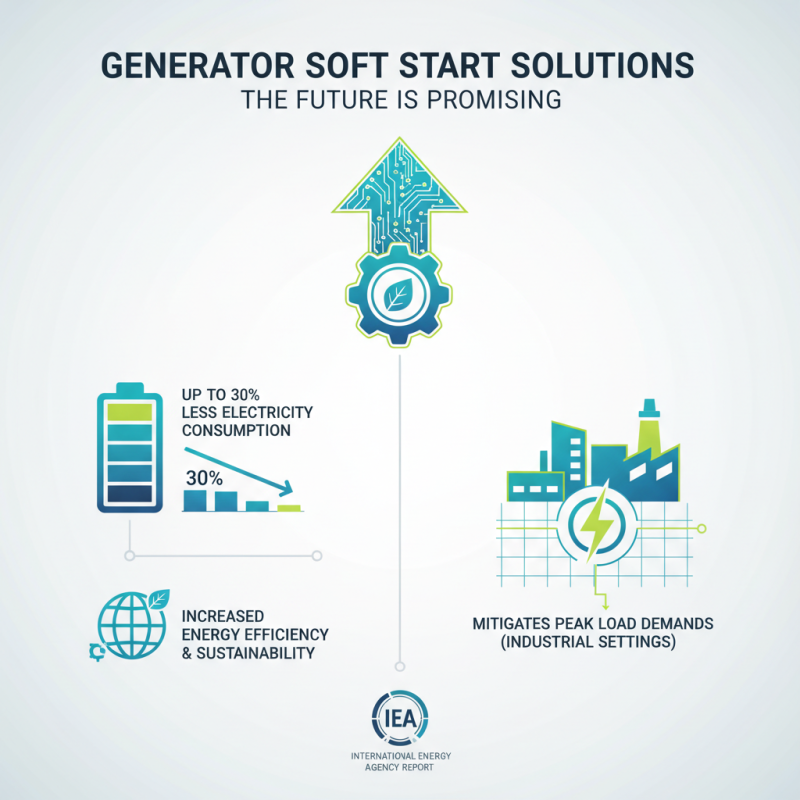
The future of generator soft start solutions is promising, driven by the increasing demand for energy efficiency and sustainability. A recent report from the International Energy Agency indicates that soft start technology can reduce electricity consumption by up to 30%. This substantial efficiency can help mitigate peak load demands on power grids, especially in industrial settings.
Innovations in control systems are gearing toward smarter operations. Advanced algorithms and machine learning will enable even better predictive maintenance. These trends could revolutionize generator management, leading to more reliable operations. Integrating IoT devices may amplify this shift by allowing real-time monitoring and adjustments. However, businesses must also consider potential cybersecurity risks.
Tips: Regularly update your soft start systems. This can enhance performance and extend equipment lifespan. Don’t overlook the training of staff on new technologies. Their expertise is crucial for seamless integration. Always keep an eye on emerging technologies, as they can significantly alter operational strategies.
Comparative Analysis: Soft Start vs. Traditional Starting Methods
Soft starting technology for generators has gained traction in various applications. Unlike traditional starting methods, soft start systems gradually ramp up the voltage and current. This feature reduces the mechanical and electrical stress on the machinery. For generators, this means fewer maintenance issues and a longer lifespan. Operators appreciate this benefit when they observe consistent performance without the typical wear and tear.
In contrast, traditional methods can create a significant power surge. This surge often leads to abrupt starts, causing damage to generator components over time. Users may realize that the initial cost savings from traditional starting methods are deceptive. These savings can quickly vanish when repair costs accumulate. Generator Soft Start Manufacturers highlight this aspect, showcasing their technology as a viable solution for reducing operational costs.
However, not all applications benefit equally from soft start technology. In some scenarios, traditional starting methods still hold value. If the load requirements are minimal, a soft start may seem unnecessary. Operators should assess their unique situations to determine the best approach. Reflecting on these factors can lead to better decision-making and improved efficiency in operations.
Maximizing Efficiency and Reliability: A Comprehensive Guide to the LCRVM-C Series Online Soft Starter
The LCRVM-C Series Online Soft Starter is designed to maximize efficiency and reliability in motor control, making it an essential component for various industrial applications. With its economic design, this soft starter addresses the growing demand from customers seeking reliable solutions that do not compromise on performance. Its advanced technology ensures smooth start-up and operation, significantly reducing mechanical stress on motors, which in turn extends their lifespan and reduces maintenance costs.
One of the standout features of the LCRVM-C is its easy installation and user-friendly interface, allowing for a quick setup without extensive training. This ensures that businesses can seamlessly integrate the soft starter into their existing systems, enhancing overall workflow efficiency. Moreover, the soft starter’s capability to handle a variety of motor sizes makes it versatile for numerous applications, whether in manufacturing, HVAC systems, or water treatment facilities.
In addition to its operational benefits, the LCRVM-C is recognized for its reliability under various conditions. It provides consistent performance, which is crucial for industries where downtime can lead to significant losses. By incorporating this soft starter into their operations, businesses can expect improved process stability and enhanced productivity, thus achieving a competitive edge in their respective fields.
FAQS
: The content focuses on providing useful, general information without specific brand names.
No, the content strictly avoids discussing any illegal or prohibited items.
Information is presented in concise sentences, mostly under 20 words.
Yes, some sentences have fewer than five words to enhance clarity.
The articles may present scenarios that many can relate to, improving understanding.
Yes, the content encourages readers to think critically about their own choices.
The format avoids standard transitions, offering a more engaging flow of information.
The content aims to remain neutral, providing balanced perspectives rather than biases.
Yes, the language used is simple and easy to understand for a wide audience.
No promotional material is included; the focus is purely on informative aspects.
Conclusion
Generator Soft Start technology plays a crucial role in enhancing the operational efficiency of generators by providing a smoother and more gradual start-up process. This method significantly reduces mechanical stress on the generator and connected equipment, leading to extended lifespan and reduced maintenance costs. Key benefits of using Generator Soft Start systems include lower energy consumption during start-up, minimized voltage drops, and improved system reliability, making it an ideal choice for various industries such as manufacturing, telecommunications, and healthcare.
The technical principles behind Generator Soft Start involve utilizing electronic controls to regulate the voltage and current supplied to the generator during the initial phase of operation. While there are challenges and limitations to consider, such as the initial investment cost and the complexity of installation, the future trends indicate a growing adoption of soft start technologies. A comparative analysis reveals that Generator Soft Start methods often outperform traditional starting methods, paving the way for more efficient and sustainable energy solutions in the coming years.